Museums have always been places where time lives side by side. A visitor can stand in the present, look at an object from the past and quietly imagine a future shaped by what they see.
What’s changing today isn’t that museums are telling stories about time – they always have. What’s changing is how visitors are being invited into those stories.
Increasingly, museums are moving away from static interpretation and toward experiences that feel more personal, participatory and flexible. In many ways, this shift is what people now refer to as “time-travel storytelling.”
Not the science fiction kind – but the human kind.
And at the heart of this evolution is digital storytelling – not as a replacement for traditional interpretation, but as a way to expand it.
From Static Interpretation to Living Narratives
For a long time, museum storytelling followed a familiar pattern. Labels explained. Panels guided. Visitors followed a path carefully designed for them.
That approach still has value. But today’s visitors arrive with very different expectations. They bring diverse cultural backgrounds, different abilities, varying levels of curiosity, and different amounts of time. Some want depth. Some want context. Some want a quick emotional connection.
Time-travel storytelling responds to this reality by loosening the grip on a single narrative. Instead of telling visitors what to see and when, museums begin offering ways to explore moments in time at their own pace.
Visitors don’t just learn about the past – they move through it, question it, connect it to their own lives, and imagine what comes next.
This is where digital storytelling becomes powerful: it allows museums to layer stories without overwhelming the physical space.
What Time Travel Really Means in a Museum Context
In museums, time travel rarely looks dramatic. It’s often subtle.
It might be a visitor choosing to hear an object’s story from the perspective of the maker rather than the collector. It might mean switching languages, revisiting a moment later, or following a theme that feels personally meaningful.
What matters most is choice.
When visitors can choose how they engage – how much detail, which viewpoint, which moment in time – storytelling becomes less about instruction and more about discovery. The museum becomes a guide rather than a narrator.
And learning unfolds naturally.
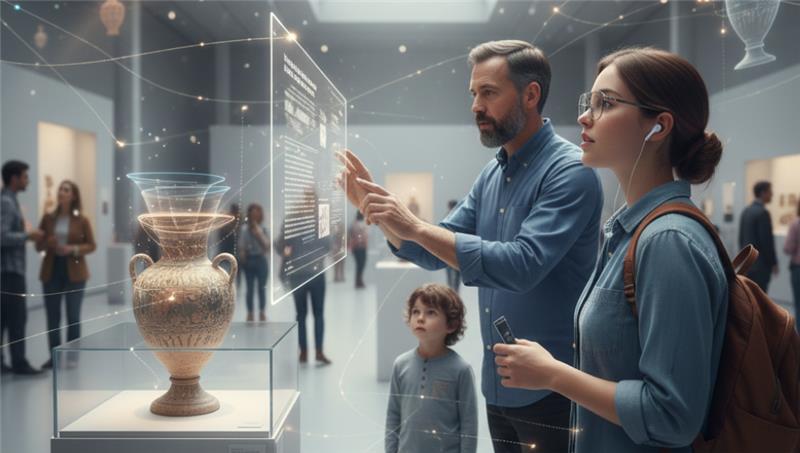
Digital storytelling supports this by allowing layered narratives, optional depth, and personalized pathways without changing the core exhibit design.
Accessibility and Inclusivity: The Make-or-Break Factor
One of the risks with immersive storytelling is that it can unintentionally exclude people. Dense text, fixed routes, sensory overload, or digital tools that assume a certain level of ability can all become barriers.
Time-travel storytelling only works when it works for everyone.
That means designing experiences that allow visitors to:
- Engage at different depths
- Move at their own pace
- Access content in formats that suit them
- Feel represented in the stories being shared
When accessibility and inclusivity are built into digital storytelling from the start, experiences become more generous. They welcome more people into the conversation – not just the most confident or experienced museum-goers.
The Role of Technology: Enabler, Not the Story
Technology often enters the conversation early, but it shouldn’t lead it.
The most meaningful digital experiences in museums are often the ones visitors barely notice. Mobile tools, layered content, and smart recognition technologies work best when they feel like a natural extension of the visit – not a distraction from it.
Used thoughtfully, digital storytelling allows stories to stretch across time:
- Before the visit
- During the visit
- After the visit
Visitors gain the freedom to linger, return, and reflect – something traditional interpretation rarely allows.
Technology becomes an enabler of connection, not the headline.
Why Time Travel Storytelling Matters Now
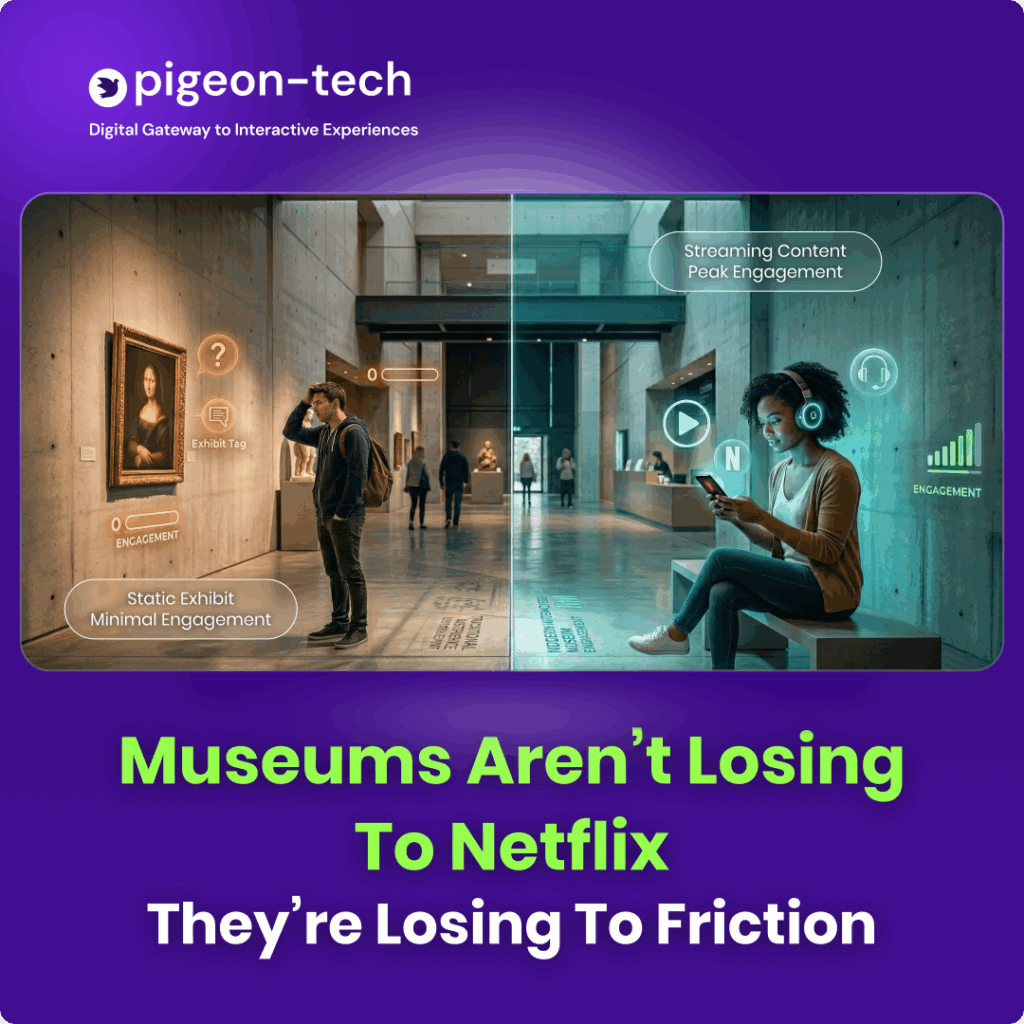
Museums today operate in a world shaped by personalization. People are used to choosing how they consume stories – what they watch, what they read, and how deeply they engage.
Time-travel storytelling doesn’t mean competing with digital platforms. It means offering something they can’t: real objects, real spaces and authentic human connections.
Digital storytelling simply helps bridge the gap between physical and personal experience.
When museums invite visitors into time – rather than asking them to stand outside it – those connections become stronger, more emotional and more memorable.
Looking Ahead: Museums as Time Guides
The museums that stand out in the years ahead won’t necessarily be the most high-tech. They will be the ones that understand their role as guides through time.
They will create experiences that:
- Respect different ways of learning
- Make space for reflection and curiosity
- Allow visitors to see themselves within history
- Connect past moments to present questions and future possibilities
In doing so, museums won’t just preserve time.
They’ll help people experience it.
Final Thought
If your museum is exploring how to make storytelling more immersive, inclusive and future-ready, the conversation doesn’t have to start with technology.
It can start with a simple question:
How do we help every visitor experience time – not just read about it?
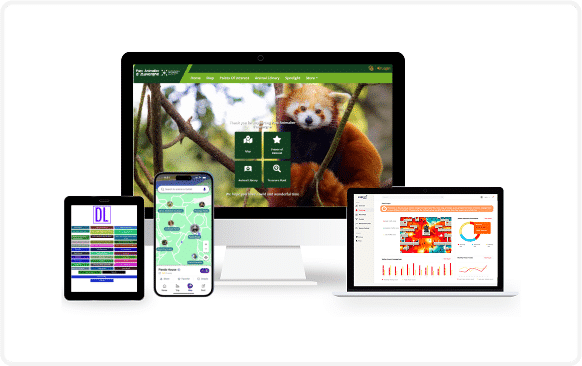
If this is something you’re thinking about, we’d love to exchange ideas and explore how visitor-led, mobile-enabled digital storytelling experiences can support the next chapter of museum engagement.
Let’s shape the future of storytelling – one moment in time at a time.