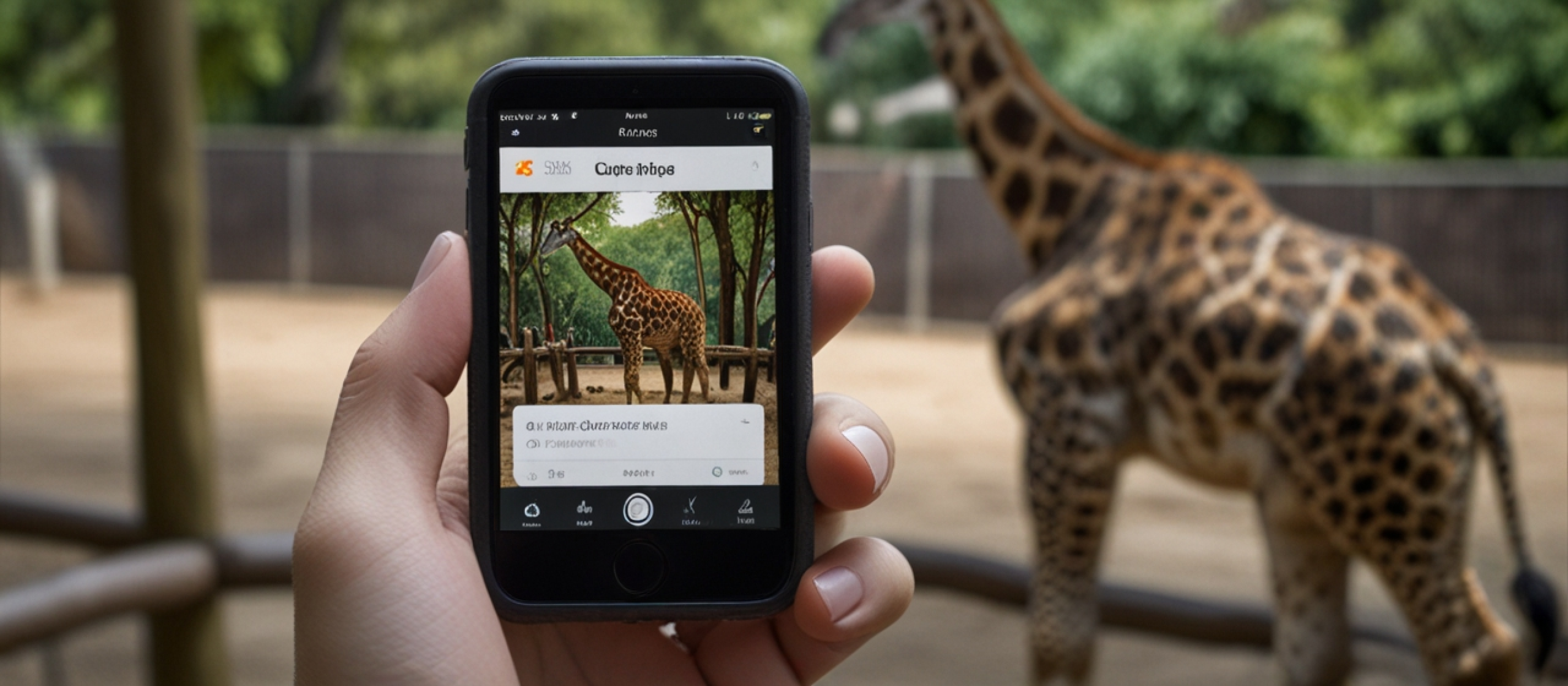
POINT
RECOGNIZE
DISCOVER
PARTICIPATE
AI Recognition for
Animals, Artifacts and Exhibits
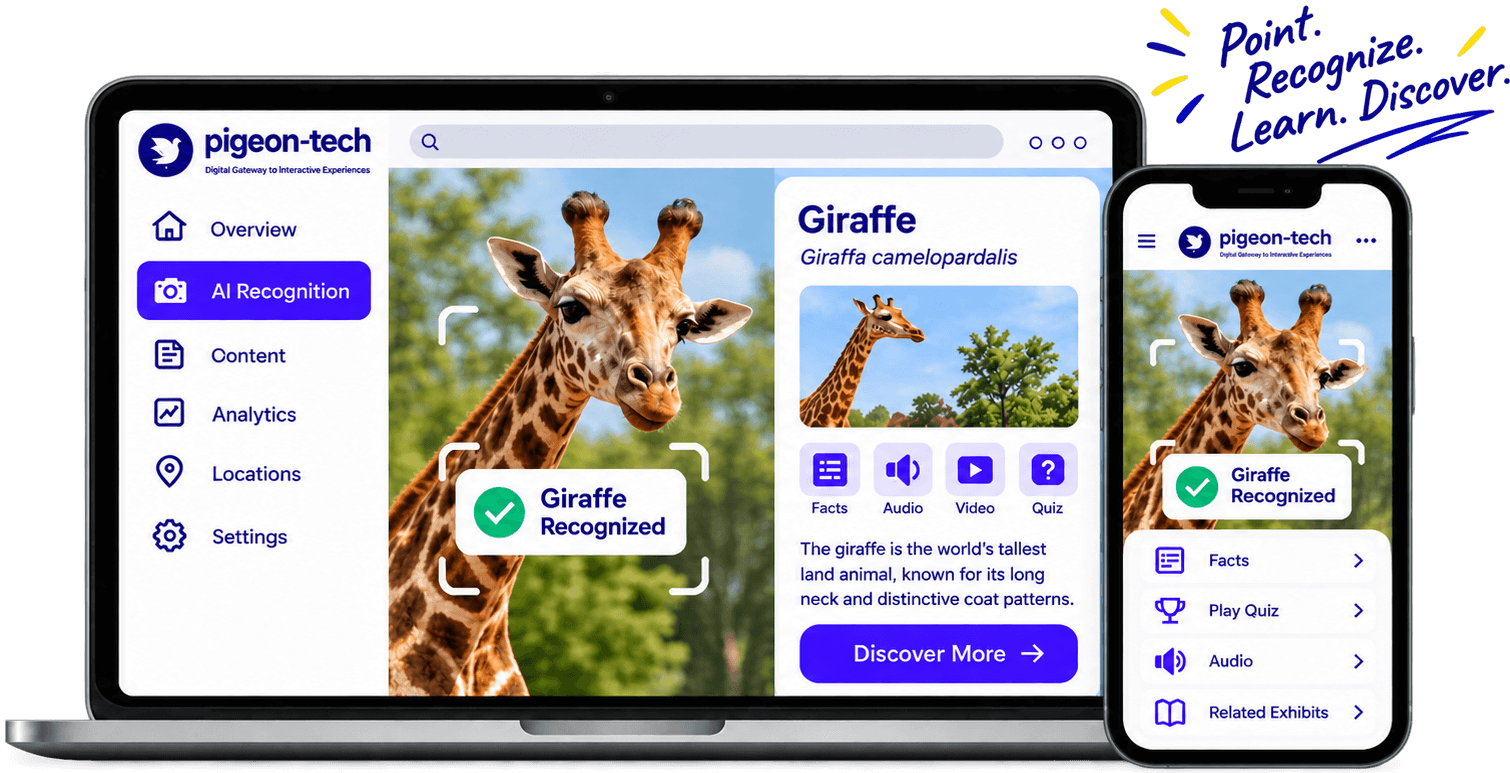
From camera to discovery in seconds
Turn visitor curiosity into interactive learning with a simple four-step experience.
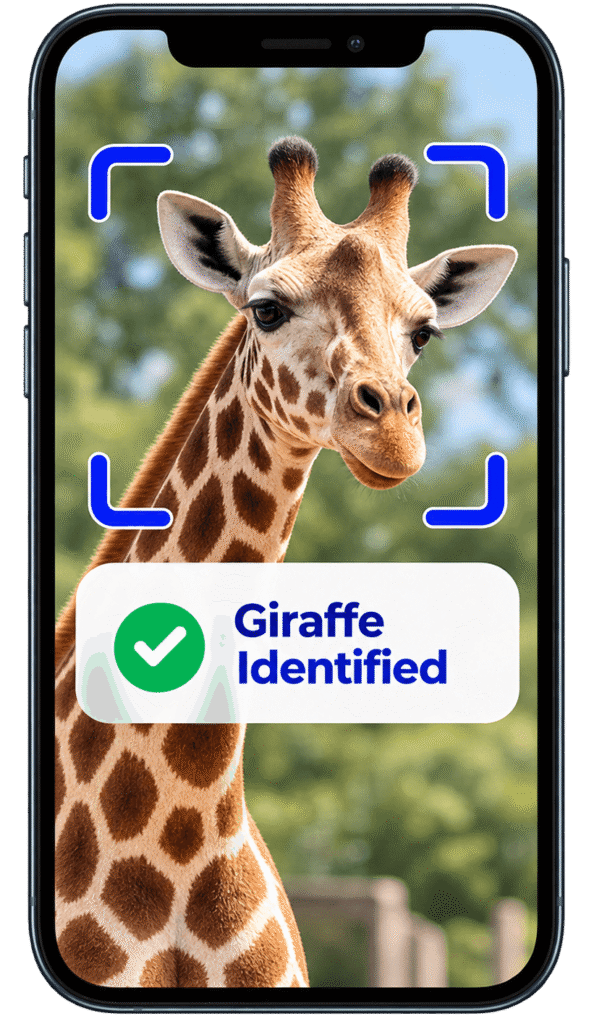
Point
Visitor points the camera at a supported animal, artifact, or exhibit.
Recognize
The configured recognition model identifies the subject.
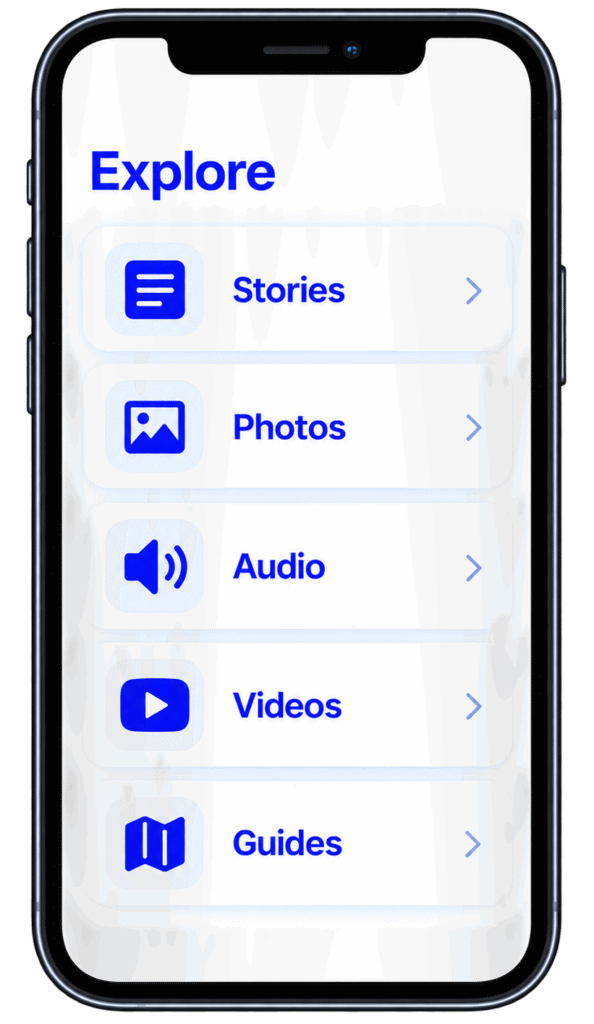
Discover
Relevant stories, media, facts, or educational content appear instantly.
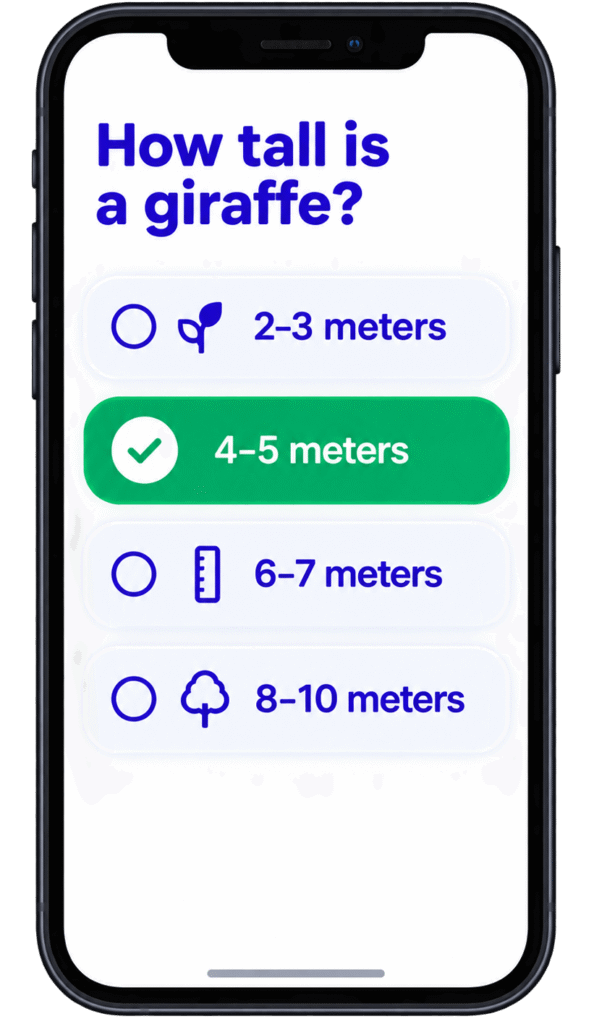
Participate
Visitors continue into quizzes, challenges, or related discoveries.
Recognition that connects the physical and digital experience
A digital wayfinding system designed for real visitor needs.
AI Visual Recognition
Recognize cataloged animals, artifacts, exhibits, or approved objects.
Rich Digital Content
Connect recognition results to text, images, audio, and video.
Learn Through Play
Add quizzes, questions, and playful educational interactions.
Connected Discovery
Guide visitors to related exhibits, stories, or next experiences.
Configurable for Your Venue
Prepare the experience around the subjects and content selected for deployment.
See AI Recognition in action
A real-world recognition journey from camera view to learning moment.
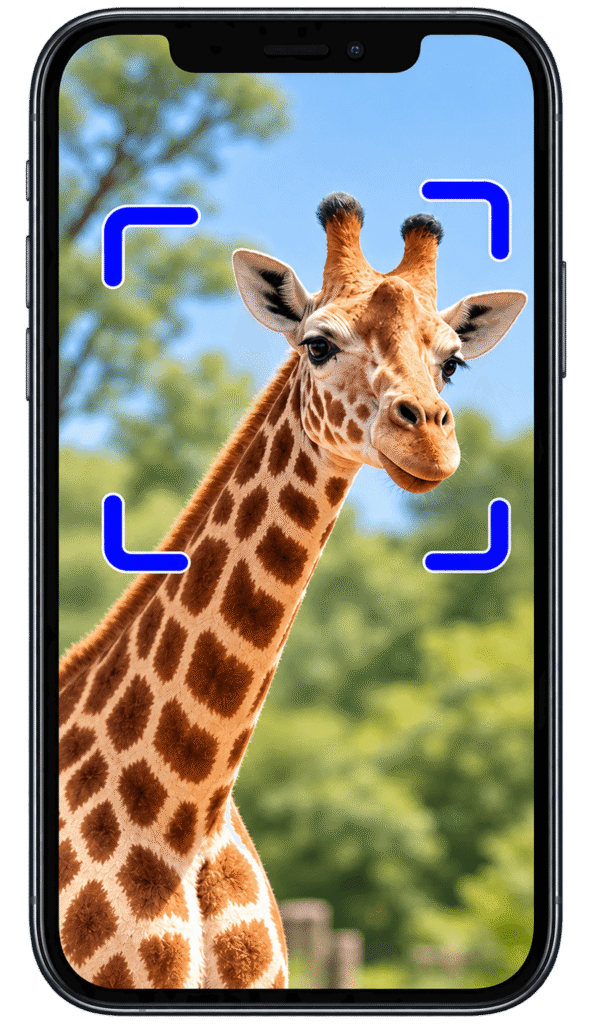
Scan
Point your camera at an animal, artifact or exhibit.

Recognize
AI identifies the subject instantly.

Discover
Get facts, stories, images, audio and video.

Learn Through Play
Try a quiz or challenge to test your knowledge.

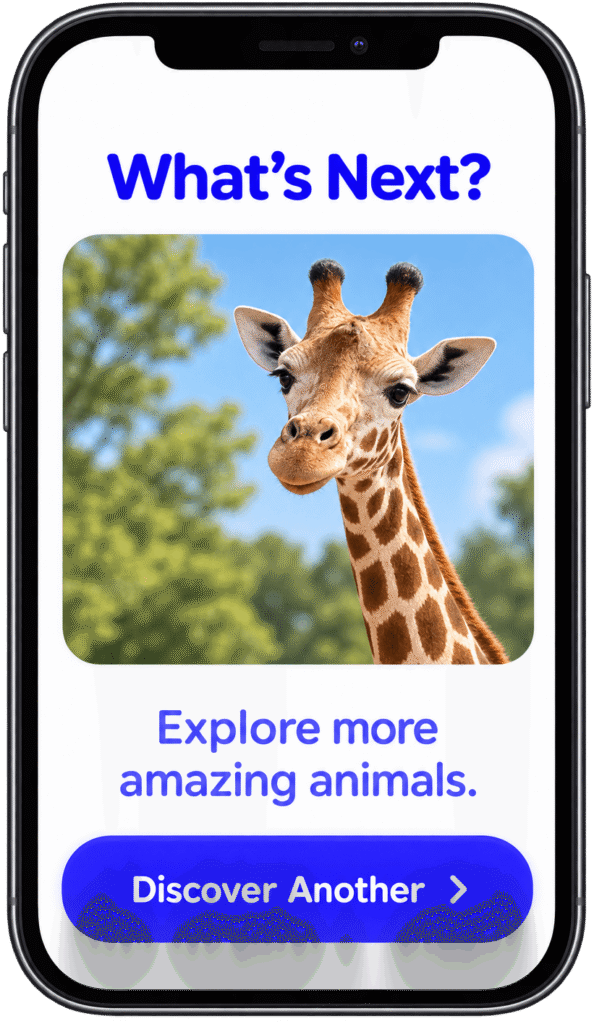
Continue Exploring
Discover related exhibits, animals or nearby content.

Value for Visitors and Venue Teams
From arrival to exploration, the app guides every step for an effortless experience.
For Visitors
For Venue Teams
Explore Related Pigeon-Tech Experiences
Gamified quizzes and badges
Map pin location links
Clue-led outdoor adventures
Recognition traffic data
Turn Curiosity Into Discovery
Frequently Asked Questions
AI recognition uses a visitor’s camera to identify a trained animal, artifact, exhibit, or object and connect it to relevant digital content.
With Pigeon-Tech, visitors can point their mobile device at a supported subject and access information such as stories, facts, images, audio, video, quizzes, or other configured experiences.
For museums, zoos, aquariums, and attractions, this can create a more interactive connection between the physical object or animal and the digital visitor experience.
Pigeon-Tech AI Recognition is configured around selected animals, artifacts, exhibits, or objects for the venue.
A visitor opens the recognition experience, points the camera at a supported subject, and the system attempts to identify it using the configured recognition model.
Once recognized, Pigeon-Tech can open the related digital experience, such as educational content, multimedia, quizzes, challenges, or other connected features.
The exact recognition setup and supported experience are defined for each deployment.
Pigeon-Tech AI Recognition can be configured to recognize supported subjects such as:
1. Animals
2. Artifacts
3. Exhibits
4. Objects
5. Educational items
6. Other approved visual subjects
What can be recognized depends on the selected use case, the quality and availability of training material, the visual characteristics of the subject, and the recognition model prepared for the deployment.
Not every object is equally suitable for visual recognition, so the final set of supported subjects should be confirmed during implementation.
Yes. Pigeon-Tech can prepare and configure the recognition experience around the animals, artifacts, exhibits, or other subjects selected for the project.
The training and setup process may require approved images or other suitable reference material for each subject.
The amount and type of training material required can vary depending on factors such as:
1. Similarity between subjects
2. Lighting conditions
3. Viewing angles
4. Background environments
5. Image quality
6. Subject movement
The final recognition scope should be agreed during implementation.
AI recognition accuracy depends on the subject, training material, camera conditions, environment, and how visually distinct the recognized items are.
Factors such as lighting, distance, viewing angle, movement, obstructions, or similar-looking animals and objects can affect recognition performance.
For that reason, Pigeon-Tech should validate the selected subjects in the intended visitor environment before launch.
We should avoid publishing a universal accuracy percentage unless it has been measured and documented for the specific deployment.
After a supported animal, artifact, exhibit, or object is recognized, Pigeon-Tech can open the digital experience configured for that subject.
This may include:
1. Facts and descriptions
2. Stories
3. Images
4. Audio
5. Video
6. Educational content
7. Quizzes
8. Challenges
9. Related exhibits or animals
10. Additional discovery options
The goal is to connect the moment of visitor curiosity with relevant content and interactive participation.
The exact experience depends on the content and features configured for the venue.
Yes. AI Recognition can be connected with configured gamification experiences such as quizzes, questions, challenges, or other educational interactions.
For example, after recognizing an animal, visitors could learn about its habitat or diet and then answer a related quiz question.
This can support edutainment by connecting discovery with participation and learning.
Gamification features such as points, badges, leaderboards, rewards, or progress tracking should be included only where they are supported and configured for the deployment.
Explore Visitor Gamification
No. Camera-based AI Recognition does not automatically require QR codes, NFC tags, or beacons to identify a supported visual subject.
Those technologies may still be used in the broader visitor experience for other purposes, such as:
1. Triggering content
2. Confirming a location
3. Supporting treasure hunts
4. Providing proximity-based interactions
5. Connecting physical signage with digital content
The appropriate technologies depend on the visitor experience being designed.
AI Recognition should be treated as one interaction method within the broader Pigeon-Tech platform.
Yes, the digital content shown after recognition can support multiple languages when multilingual content is configured for the deployment.
Depending on the implementation, visitors may be able to access translated:
Text
Exhibit information
Animal information
Stories
Quiz content
Audio
Other supported digital content
The availability of each language depends on the translations and content provided or approved for the project.
AI Recognition identifies the subject; multilingual support determines how the related experience is presented to the visitor.
Explore Multilingual Experiences
Pigeon-Tech can track supported interaction events when analytics are configured for the AI Recognition experience.
Depending on the implementation, venue teams may be able to review activity such as:
Recognition attempts
Successful recognition events
Recognized subjects
Content opened after recognition
Quiz or challenge interactions
Related content engagement
Session or completion activity
The exact analytics available depend on the tracking configuration and deployment.
Recognition activity can help venue teams understand how visitors interact with the experience, but those interactions should not automatically be interpreted as proof of learning or visitor satisfaction.
Explore Visitor Analytics