Last Saturday morning, a family of four sat around their kitchen table deciding how to spend the day. One kid wanted the science museum. The other wanted to stay home and watch YouTube. Dad scrolled through the cinema listings. Mum quietly Googled “fun things to do near me.”
The museum made the shortlist. But it had to compete – and not just against other attractions.
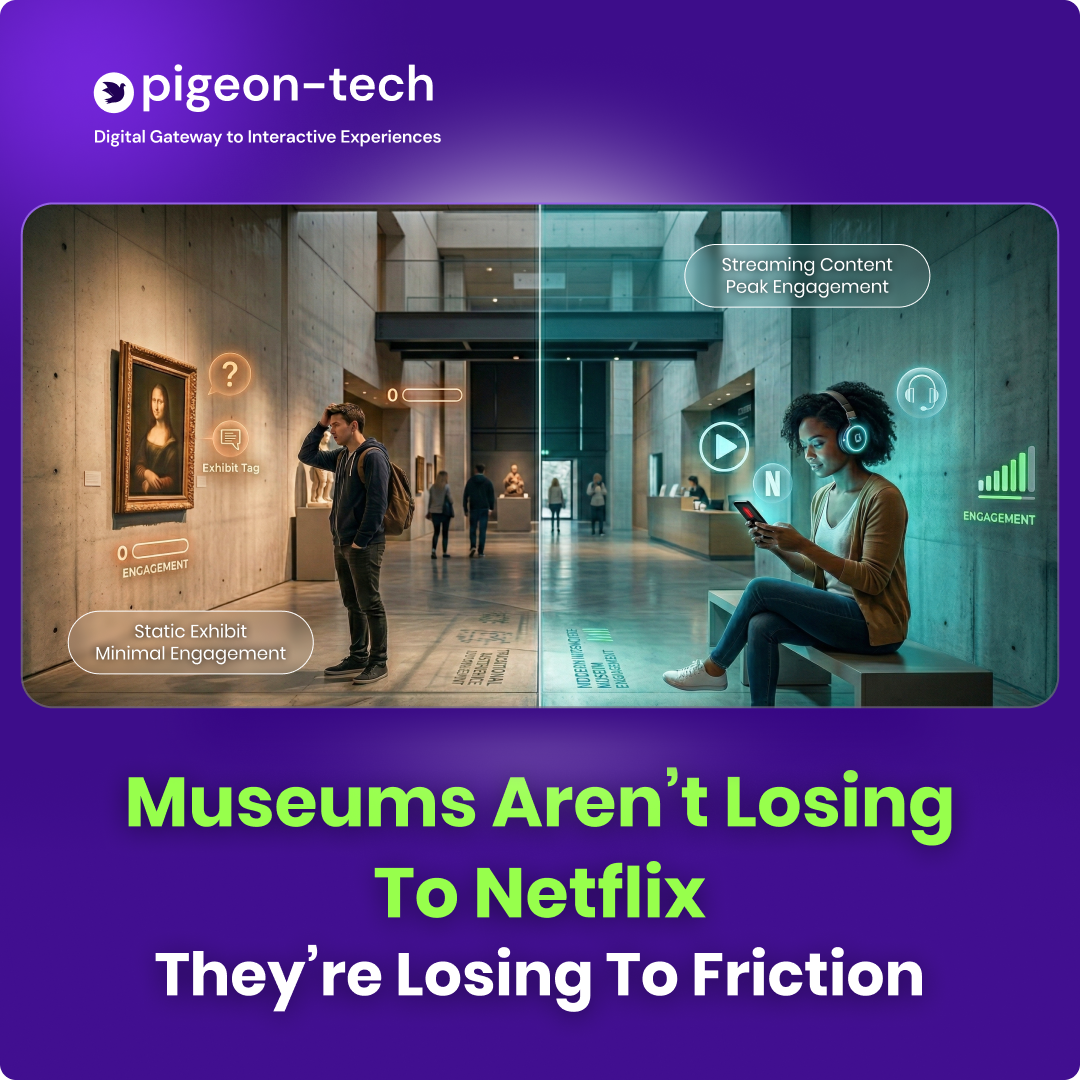
This is the new reality for museums, galleries, zoos and science centres everywhere. You are no longer being compared to the heritage site down the road. You are being compared to Netflix, TikTok and the slick immersive experience that just opened in the old warehouse by the train station. The bar for what feels “worth it” has moved, and it has moved fast.
The Numbers Are Hard to Ignore
The American Alliance of Museums 2025 snapshot surveyed over 500 museum directors. Fifty-five percent reported fewer visitors than before the pandemic – a figure that actually worsened compared to the year prior. Meanwhile, a 2025 study by Manifesto found that only 30% of visitors leave a cultural attraction genuinely engaged – and only then if their expectations were clearly exceeded during the visit.
“Audiences today are incredibly sophisticated, and museums and galleries are facing huge competition for eyeballs and attention.” – Deputy Director
Read that again. Seventy percent of the people who paid for a ticket, drove to your venue and walked through your door did not leave feeling genuinely engaged. That is not a content problem. That is an experience delivery problem.
Why This Is Happening
Here’s the uncomfortable truth: digital platforms have trained all of us to expect personalisation, frictionless navigation and instant relevance. Netflix knows what you watched last Tuesday and recommends something perfect. Google Maps gets you there in four taps. TikTok serves you exactly what holds your attention without you asking for it.
Then a family walks into a museum, picks up a paper map, tries to figure out where the dinosaurs are, loses a child near the gift shop and gives up on finding the featured exhibition entirely. The content might be world-class. The experience of accessing it is not.
The engagement gap is not about relevance – museums offer something genuinely irreplaceable. It’s about the gap between what you’re offering and how easy it is to actually receive it.
What Closing the Gap Actually Looks Like
The institutions gaining ground right now are not necessarily the biggest or best-funded. They are the ones treating visitor experience as a design and technology problem, not just a programming one.
Before the visit: Visitors who can plan their trip – curating a route, identifying highlights, knowing what’s new – arrive more motivated and leave more satisfied. Pre-visit tools are among the highest-return investments an attraction can make.
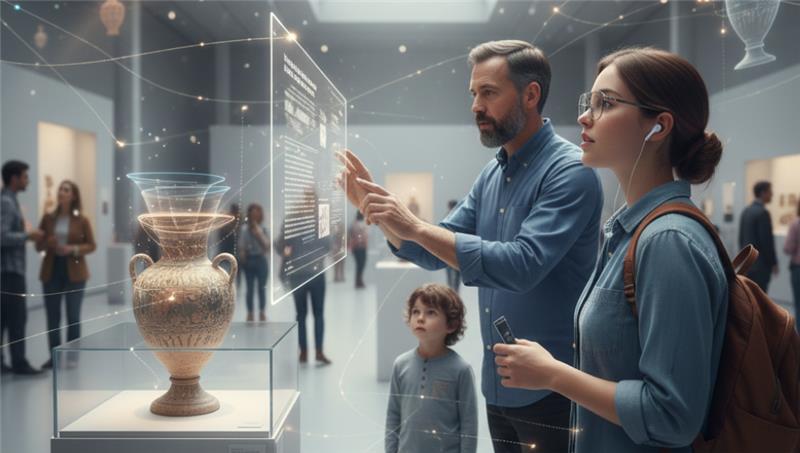
During the visit: Smart wayfinding removes the silent frustration of being lost. Exhibit recognition turns a label into a story. Gamified trails keep younger visitors engaged and drive them into under-visited zones. Location-based push notifications surface the right information at the right moment – not at the entrance, where nobody reads anything.
After the visit: The experience should not end at the exit. What’s new, what’s coming, a recap of what they saw – this is how you convert a one-time visitor into a returning one. It is also how you justify the membership ask.
The Real Competitive Advantage
Netflix cannot let a child hold a piece of moon rock. It cannot put a family inside a recreated Victorian street or let a teenager solve a puzzle surrounded by 300-year-old artefacts. The physical, shared, real-world experience that cultural attractions offer is something no streaming platform can replicate.
The engagement gap exists not because what museums offer is less valuable – but because accessing that value still involves too much friction. The family that chose YouTube over the science museum last Saturday was not making a statement about culture. They were making a statement about ease.
The institutions that thrive in the next five years will be the ones that take that seriously. And the good news? The tools to do it already exist.
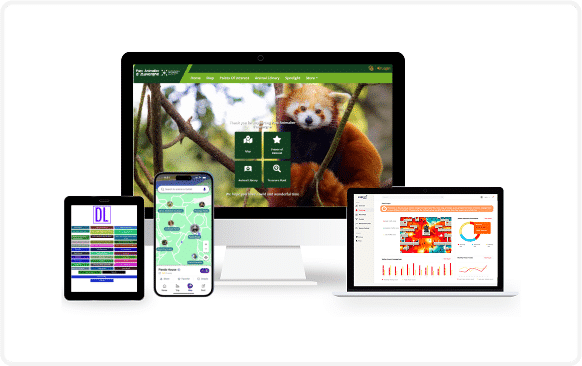
Pigeon-Tech is built precisely for this moment. Smart wayfinding removes the frustration of getting lost in a large venue. Exhibit recognition turns a static display into a living story – surfacing videos, context, and connections the moment a visitor points their phone at it. Gamified treasure hunts pull families deeper into the museum, turning passive wanderers into active participants. Location-based push notifications deliver the right message at exactly the right point in the visit, not buried in a welcome email nobody reads.
Before the visit, the pre-visit planning tool gives visitors a reason to commit – curating a personalised route and building anticipation before they even leave the house. After the visit, real-time feedback and visitor analytics hand your team the evidence they need to keep improving: which exhibits held attention, where visitors dropped off, and what brought people back. Combined with mobile food and beverage ordering that eliminates queues and a white-label app that carries your brand throughout, Pigeon-Tech connects every touchpoint of the visitor journey into a single, coherent experience.
The engagement gap is real. But it is not permanent. Netflix wins on convenience – museums can win on everything else, once the friction is gone.