“What should we do next?” “I don’t know, what’s over there?”
It’s 11:30 AM. A parent stands at a major path junction holding two juice boxes, staring at a static directional sign, comparing it to a PDF downloaded map displayed on their small and poorly lit phone. Their kids are starting to get restless.
They make a split-second guess, turn left toward the exit plaza, eat a quick lunch, and leave.
They didn’t leave because they were done. They left because they were tired of figuring out what to do next. Just 200 yards away, an empty, air-conditioned hands-on exhibit and a scheduled live presentation were waiting. The experience was available; the bridge to get them there was missing.
This raises an important question:
How much value is lost when visitors cannot easily discover, navigate, or engage with the experiences an organization has already created?
For many venues, the answer is more significant than it first appears.
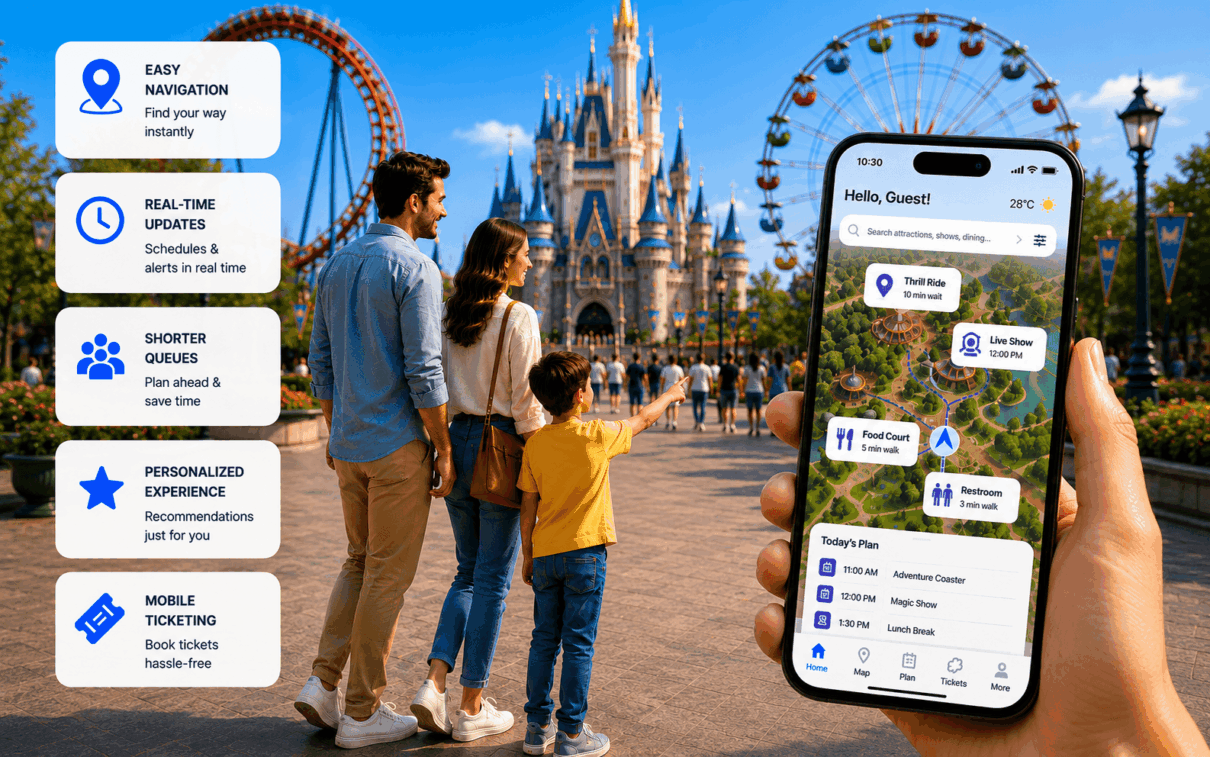
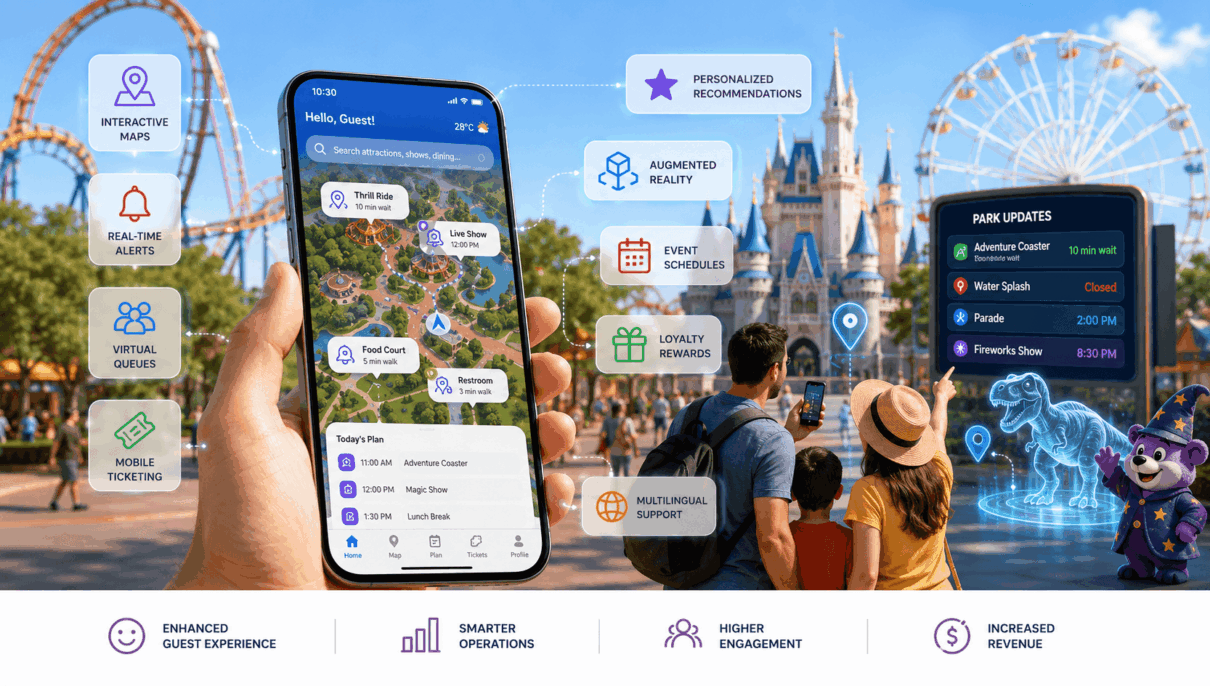
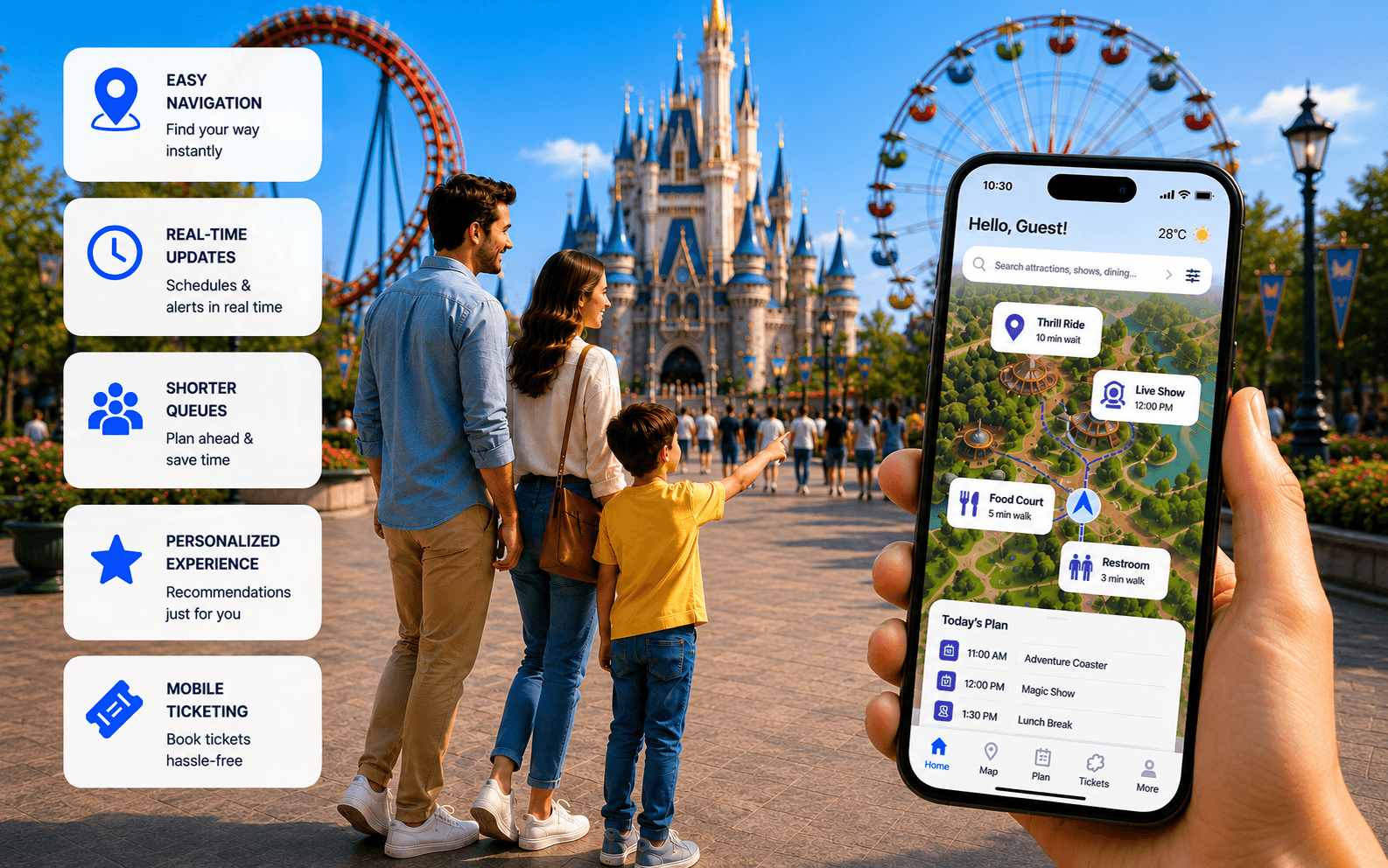
A visitor experience platform connects venue systems, content, location data, schedules, and visitor interactions to help people discover, navigate, and engage with experiences throughout their journey.
The Business Problem is not a Lack of Experiences
Museums add exhibitions. Zoos introduce new animals and programs. Theme parks launch attractions. Conferences add sessions. Tourism destinations create new points of interest.
The investment is substantial.
But creating an experience and getting visitors to experience it are two different business challenges.
A visitor does not arrive with the organization’s internal map of priorities.
They do not know which exhibit management considers a “must see.” They may not know that a special event is happening nearby. They may not understand how long it will take to walk across the venue. They may simply follow the most obvious path.
This reveals a gap between experience availability and experience discovery.
Executives can view it as a utilization and return-on-investment issue: experiences that visitors do not discover cannot deliver their full value.
The American Alliance of Museums emphasizes the importance of accessible wayfinding and designing museum touchpoints around the visitor experience.
The implication for executives is important:
A great experience has little value for a visitor who never finds it.
That changes how visitor experience should be measured.
Instead of asking only:
- How many experiences do we offer?
- How many people entered the venue?
- How satisfied were visitors overall?
Leaders should also ask:
- Which experiences are consistently overlooked?
- Where do visitors lose their way?
- Which exhibits receive disproportionate traffic?
- What experiences are difficult to discover?
- Where are visitors repeatedly asking staff for directions?
- What happens between arrival and departure?
These questions reveal the quality of the visitor journey, not just the quality of individual experiences.
Why Traditional Visitor Experience Tools Fall Short
Conventionally, maps, signs, websites, mobile applications, kiosks, brochures, staff, digital displays, social media channels, and ticketing systems are present to provide information.
The challenge is not that information is unavailable. It is that maps, websites, apps, schedules, and ticketing systems often operate separately, leaving visitors to piece the journey together themselves.
This is how a visitor experience platform differs from a standalone map or mobile app: it can bring information from multiple systems together and present it in the context of the visitor’s journey.
This is especially difficult in large or complex environments. A visitor may know what they want to see but not where it is. They may know where they are but not what is worth experiencing nearby. They may have a destination in mind but lack enough time to reach it.
Digital maps can improve navigation, but navigation alone is not the same as experience discovery.
IAAPA has documented the broader shift toward digital maps in attractions as smartphones increasingly become part of how guests navigate physical environments.
The opportunity is to move beyond “Where am I?” toward “What should I experience next?”
How a Visitor Experience Platform Improves the Visitor Journey
- Move Beyond a Linear Journey
The traditional visitor journey looks like:
Arrival → Explore → Experience → Exit
But real journeys are more dynamic:
Arrive → Discover → Decide → Navigate → Explore → Change Plans → Engage → Continue
Every step creates a new decision.
- Deliver the Right Information at the Right Moment
Visitors do not need more information. They need relevant information when it matters.
A visitor experience platform can turn context into action. Instead of simply showing nearby attractions, it might tell a visitor:
“The rainforest exhibit is five minutes away and currently has a short wait. The next animal presentation begins in 15 minutes nearby.”
- Turn Information Into Decisions
A static map provides information. A visitor experience platform helps visitors decide what to do next.
The Goal is Not More Technology; It is Less Friction.
A venue may already have ticketing, membership, event management, content management, CRM, mapping, point-of-sale, or scheduling systems. The strategic question is whether those capabilities can contribute to a simpler visitor journey.
They want to know:
Where am I?
Where should I go?
What’s worth seeing?
What’s happening now?
What is nearby?
What can I do with the time I have?
How A Visitor Experience Platform Applies Across Industries
Industry | Visitor Challenge | Opportunity |
Visitors may miss feeding times, educational programs, or nearby experiences. | Help visitors discover relevant experiences based on location, timing, and interests. | |
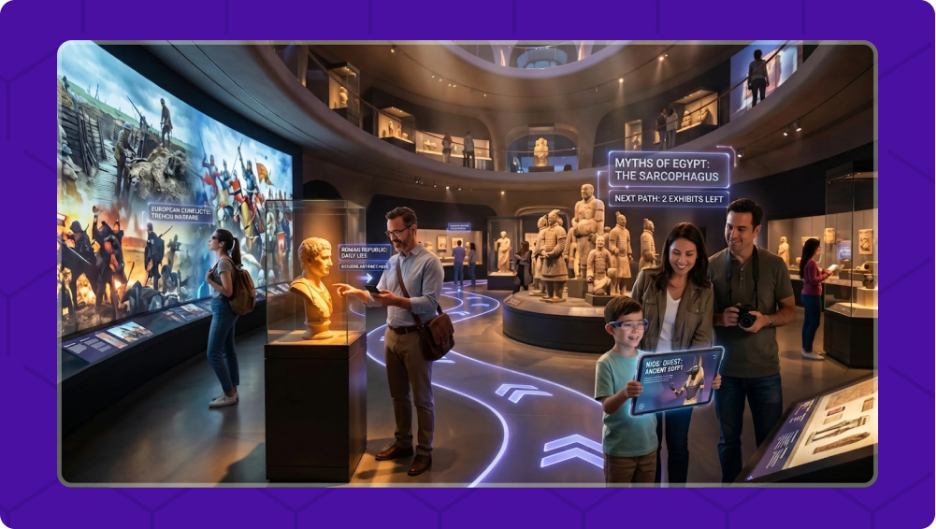
Museums & Science Centers | Visitors may overlook exhibitions or experiences that match their interests. | Make relevant exhibits, collections, and events easier to discover. |
Theme & Water Parks | Visitors have limited time and must balance crowds, wait times, distance, and schedules. | Help visitors make better decisions about what to experience next. |
Conferences & Trade Shows | Attendees may focus on planned sessions and miss other valuable opportunities. | Surface relevant sessions, exhibitors, meetings, and networking opportunities. |
Tourism Destinations | Visitors often discover major landmarks but miss smaller or nearby experiences. | Help visitors discover experiences beyond the destination’s most obvious attractions. |
The Executive Opportunity: Measure What Visitors Miss
Most organizations measure what visitors do. Fewer measure what visitors fail to discover.
If one exhibit attracts 40% of visitors while another attracts 5%, the question should not simply be, “How do we promote the second exhibit?” It should be:
“Why are visitors not finding or choosing it?”
The answer may involve location, timing, signage, relevance, accessibility, competing attractions, or a lack of context.
Executives can begin by identifying five signals:
- Discovery gaps — Which experiences receive less traffic than expected?
- Navigation friction — Where do visitors frequently get lost or ask for assistance?
- Timing gaps — Which experiences are missed because visitors do not know when they occur?
- Engagement gaps — Where do visitors move through without interacting?
- Journey gaps — Where does the visitor experience break down between major touchpoints?
These signals turn visitor experience from a subjective discussion into a business improvement discipline.
What a Visitor Experience Platform Should Deliver
The value of a visitor experience platform should not be measured by the number of features it contains.
The better question is:
Can it help the organization create a simpler, more relevant visitor journey without forcing the organization to replace everything it already uses?
A strong visitor experience platform should turn relevant information, such as location, schedules, content, events, operational updates, and visitor preferences, into useful context that helps visitors make better decisions throughout their journey.
The technology should remain largely invisible.
The visitor should simply feel that the experience makes sense.
That is the real measure of success.
Pigeon-Tech Perspective: Better Visitor Journeys Through Discovery
Pigeon-Tech approaches visitor experience from the same perspective: venues already have valuable experiences, information, and systems. The opportunity is to make that value easier for visitors to discover throughout their journey.
Real-World Example: Fossil Rim Wildlife Center
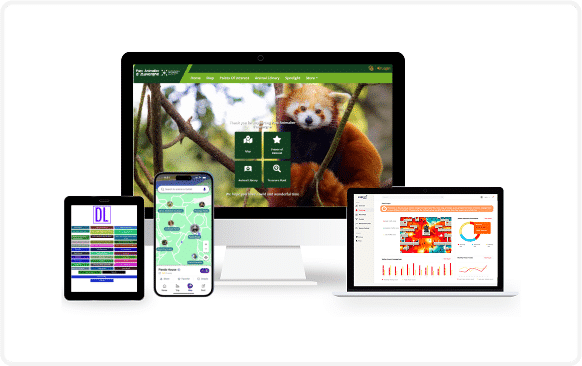
At Fossil Rim Wildlife Center, Pigeon-Tech connects what visitors see, where they are, and what they can discover next.
For example, animal recognition helps visitors identify animals they encounter and explore related stories, conservation information, and educational content. Navigation, events, tours, and alerts then help connect that discovery to other experiences across the venue.
The result is more than helping visitors find their way. It helps turn one discovery into the next.
The broader lesson: When discovery is connected to context, visitors have a better opportunity to experience more of what a venue has already created.
Executive Takeaways
The next generation of visitor experience is not simply about adding another digital channel.
It is about helping visitors discover and engage with more of what the venue has already created.
Three ideas are worth taking back to the executive team:
- Experience availability requires engagement to become valuable.
An attraction, exhibit, program, or event only creates value when visitors can discover and engage with it. - Navigation and discovery are connected.
Visitors do not separate “finding their way” from “deciding what to do next.” The two are part of the same journey. - The answer may not be another system.
Organizations can often improve the visitor journey by making better use of existing systems and information rather than replacing them.
The strategic question is not whether to add another visitor technology. It is whether the current digital environment can help every visitor discover more of what the organization has already created.
Start with A Proof of Concept
Organizations do not need to transform the entire visitor journey at once.
A practical starting point is a focused proof of concept around one measurable problem: a high-value exhibit that is consistently overlooked, a location where visitors frequently need directions, an event where attendance falls short, or a journey that creates repeated friction.
The goal is to test whether improving one visitor journey can produce a measurable improvement.
Start with one problem, one visitor journey, and one measurable outcome. For example, an organization could measure whether more visitors discover an overlooked exhibit, whether navigation-related questions decrease, or whether attendance improves for an under-discovered event.
This creates a practical way to evaluate the approach before expanding it across the broader visitor journey.