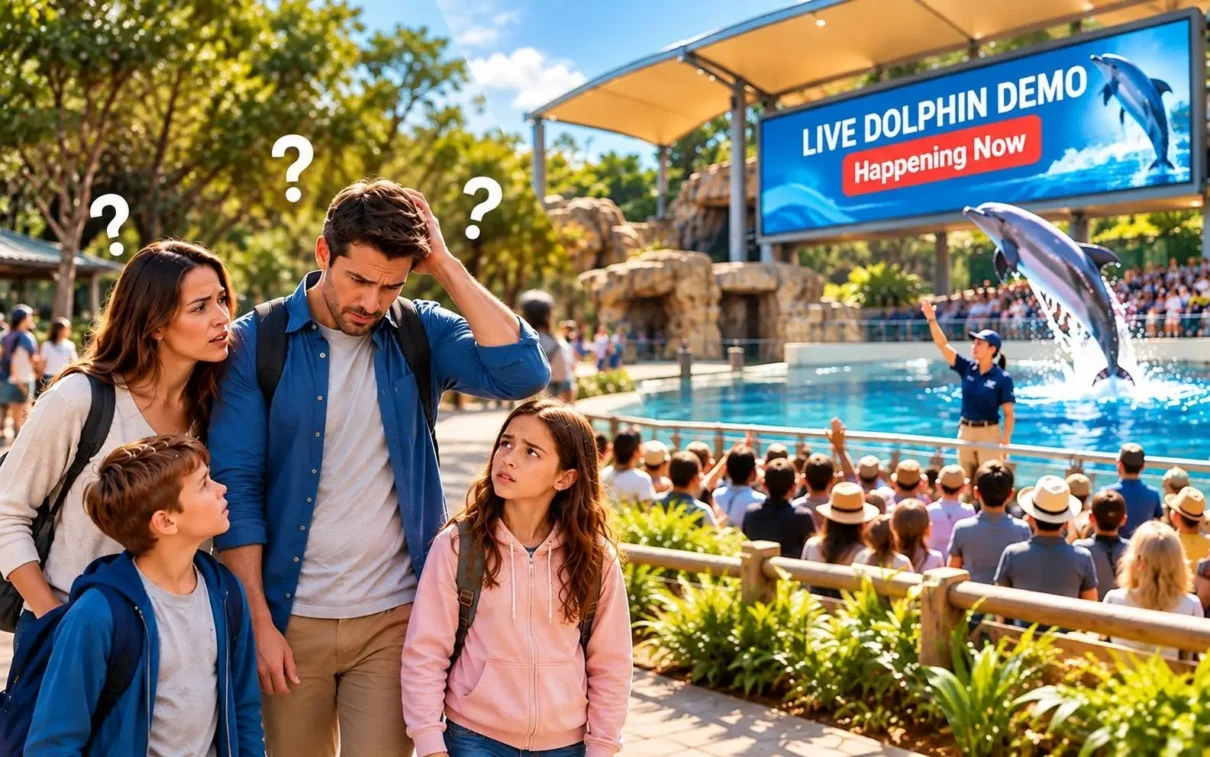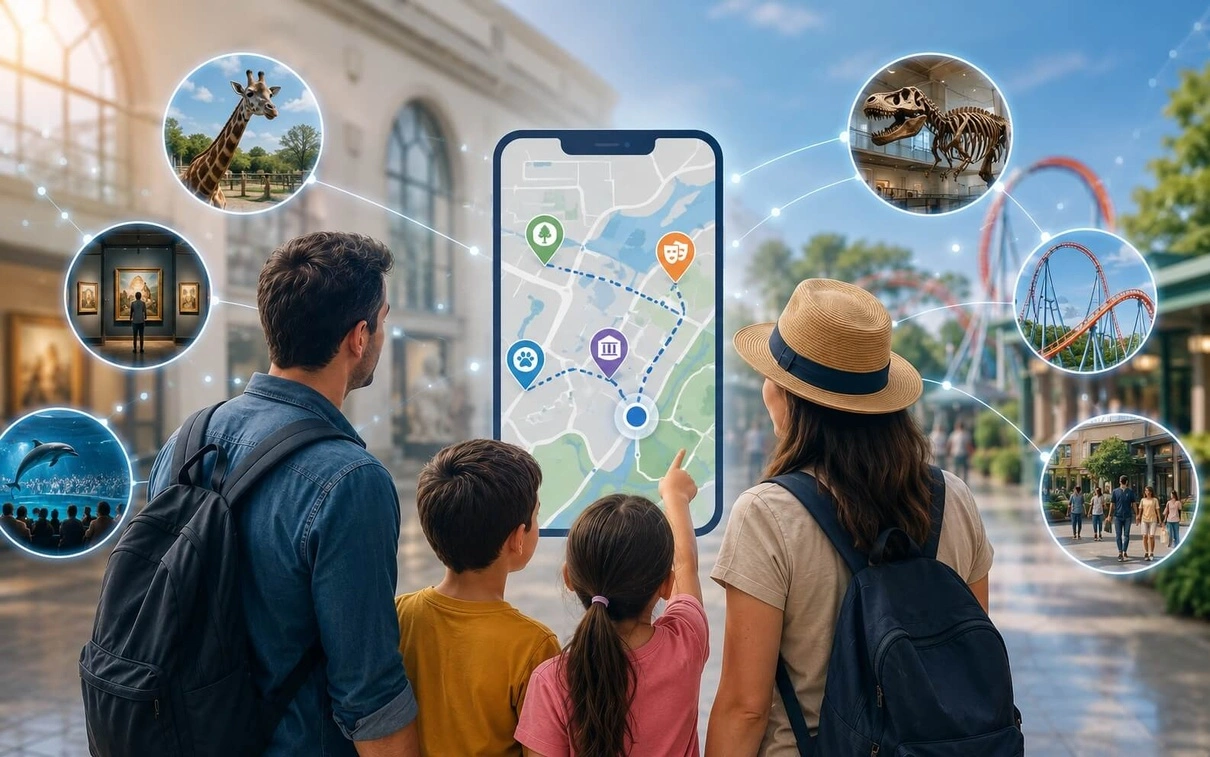
A family can spend hours inside a zoo and still miss some of its most valuable experiences-not because those experiences aren’t there, but because they were never easy to find.
They find the headline attractions. They follow the most obvious route. They stop at the places they already know about. Meanwhile, smaller exhibits, feeding sessions, educational programs, and experiences outside the main path can remain undiscovered.
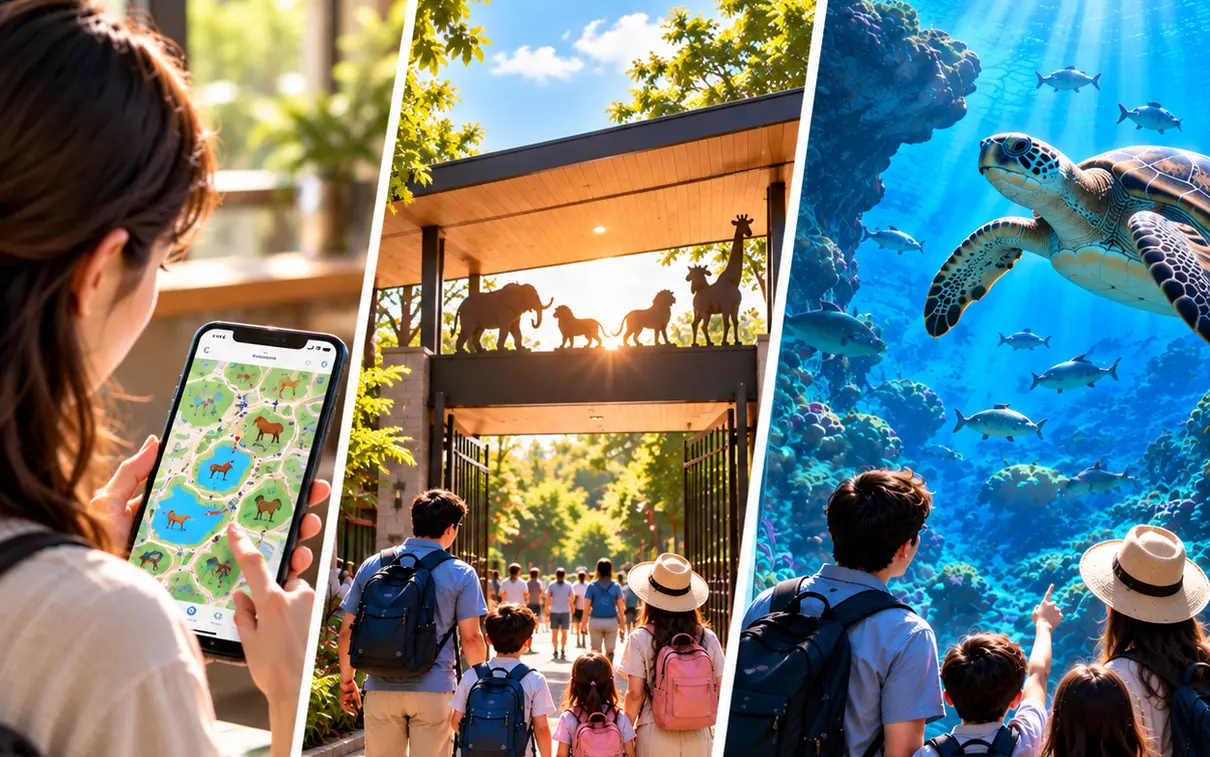
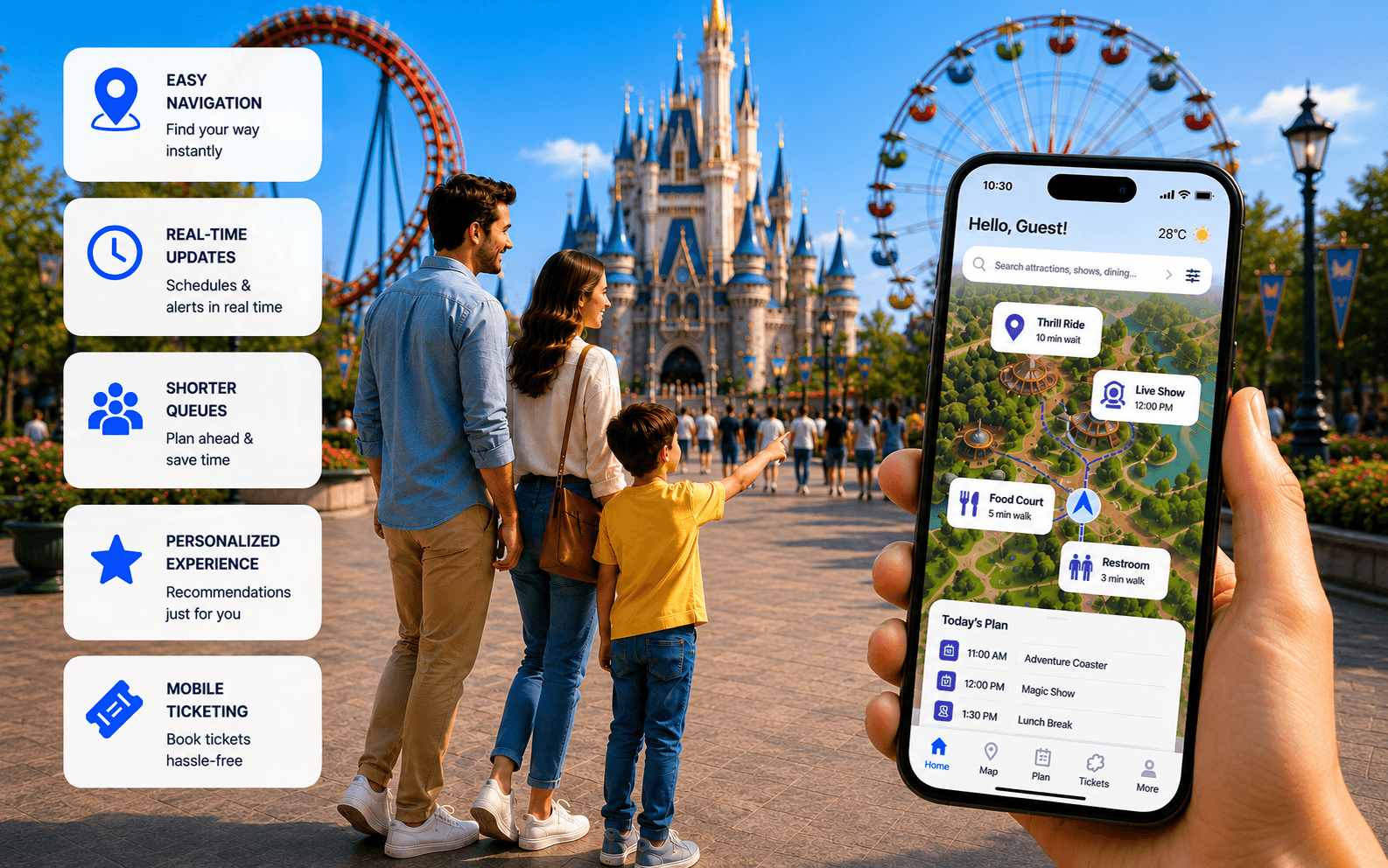
Wayfinding becomes more than navigation when it helps visitors discover experiences they might otherwise miss. A well-designed visitor wayfinding app can make it easier to find exhibits, shows, dining options, restrooms, shops, and other experiences, without requiring visitors to stop, search, or ask for directions.
From Navigation to Meaningful Wayfinding
Large venues are designed to encourage exploration.
Zoos, museums, theme parks, and conference centers all share the same challenge: large physical environments make discovery harder
There is an unavoidable challenge on a physical scale: visitors cannot experience what they cannot find.
When navigation becomes difficult, visitors naturally simplify their journey. They follow the most obvious route, prioritize familiar attractions, or skip experiences that take extra effort to find. And when time is limited, they are even more likely to stick to what they already know.
The growing adoption of indoor location technology also points to a broader shift toward digital wayfinding. MarketsandMarkets 2026 projects the indoor location market to reach $50.10 billion by 2031, reflecting growing demand for technologies that help people find their way and discover more in complex physical spaces.
For technology decision makers, this creates an important question:
How much visitor engagement is being lost simply because people cannot easily navigate the experience?
Maps, signs, and staff can help visitors locate destinations, but they rarely help visitors decide what to discover next
This is where navigation becomes more useful: helping visitors see what’s around them, making better choices, and discovering more along the way.
The Problem with “Just Follow the Signs”: Why Digital Wayfinding for Visitors Matters
Physical signage or printed maps are part of venue navigation. However, they are not always effective.
Their limitation is that they cannot easily adapt to the visitor’s changing context.
For example, a printed map cannot easily account for:
- Where the visitor is now
- What is happening nearby
- Temporary closures or changes
A digital map makes this information easier to access, but a static map on a phone still cannot respond to these changing visitor needs.
So, the real value isn’t the display of a map- it’s the guidance that helps visitors make better next choices.
If a visitor searches for a particular exhibit, a basic map can show its location. A more intelligent visitor experience can also help answer:
- What is nearby?
- What can I experience on the way?
- What should I explore next?
Together, these capabilities turn wayfinding from a simple tool for finding places into part of the visitor experience.
A Better Way to Think About Visitor Wayfinding
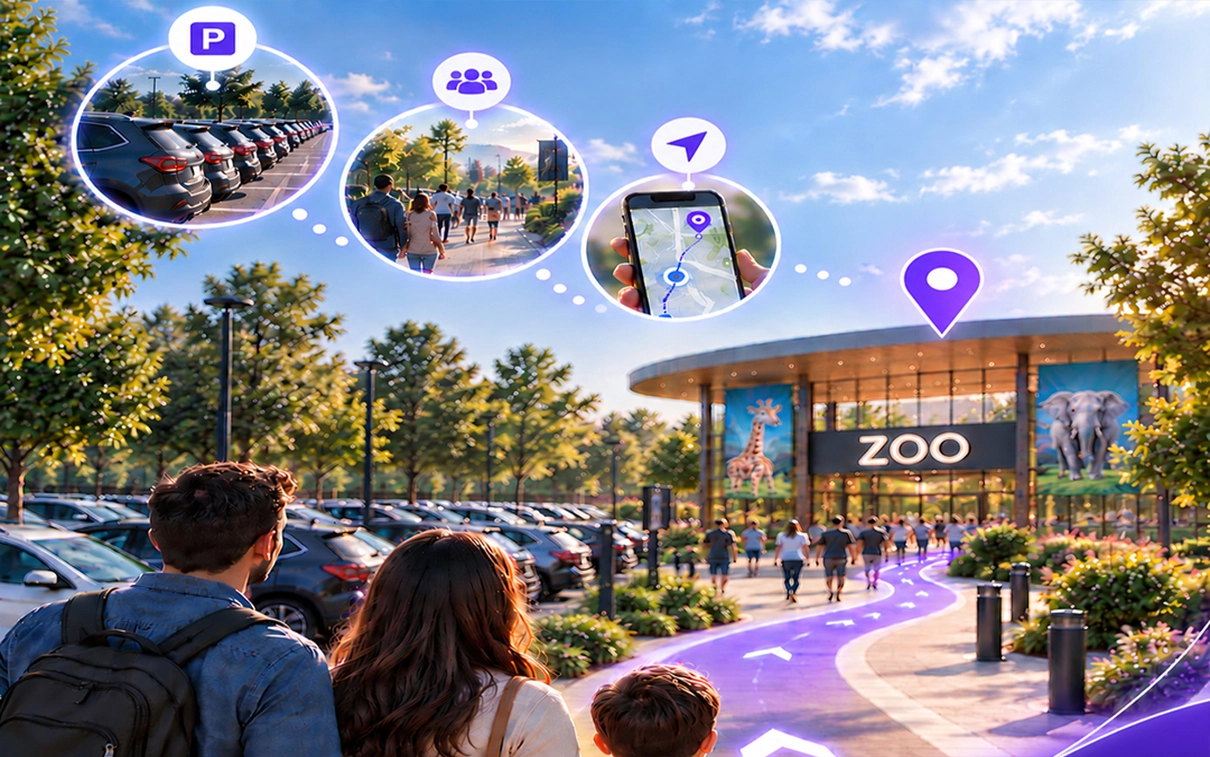
Think of digital wayfinding as part of the visitor journey. The map is the foundation; the value comes from what happens around it.
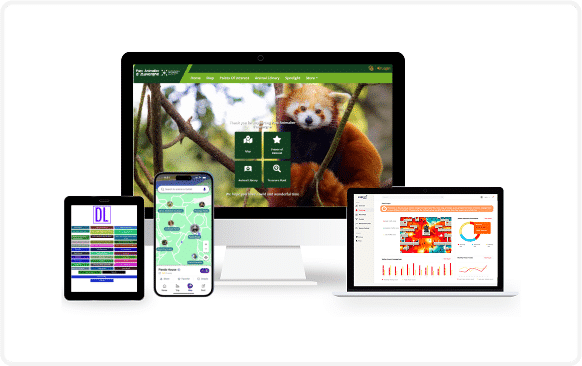
A visitor wayfinding app can become part of a broader visitor experience platform, connecting navigation with the experiences, content, and information that help move visitors from one meaningful interaction to another.
Find → Navigate → Discover → Engage → Continue
For example:
Imagine a family heading to the elephant exhibit. The app doesn’t just show them the way. It also lets them know that elephant feeding starts nearby in four minutes.
A conference attendee walking toward a keynote could discover exhibitors, networking areas, or another session nearby.
The goal is not to make the journey longer, but to highlight the right opportunity at the right moment, while keeping the journey seamless.
For technology leaders, this distinction matters: good digital wayfinding should reduce friction while creating more opportunities for meaningful engagement.
The Technology Decision is Bigger than Choosing a Map
For technology decision makers, implementing digital wayfinding should not begin with the question:
Which mapping technology should we buy?
A more useful starting point is:
What visitor behaviors are we trying to improve?
That question changes the technology conversation.
Organizations should consider how wayfinding will connect with their existing digital ecosystem.
Can it work with existing visitor applications?
Can it use current points-of-interest data?
Can it support real-time updates?
Can it connect with event schedules and venue information?
Can the organization measure whether navigation is actually increasing engagement?
The goal is not another isolated technology system. It is a connected visitor experience that can be measured and improved.
The Measure of Success is not Just Navigation
A successful wayfinding initiative should not be measured only by whether visitors reach their destination.
That is the minimum expectation.
Technology leaders should also consider broader visitor experience metrics:
Navigation engagement
Are visitors actively using digital wayfinding?
Experience discovery
Are visitors discovering more points of interest?
Staff assistance
Are navigation-related questions decreasing?
Visitor satisfaction
Does easier navigation contribute to a better overall experience?
This shifts the conversation from “Do we have digital wayfinding?” to “Is digital wayfinding improving the visitor journey?”
That is a more meaningful business question because it connects wayfinding to measurable visitor outcomes.
Pigeon-Tech Perspective: Connecting Navigation with the Visitor Journey
At Pigeon-Tech, we view wayfinding as part of the broader visitor journey – connecting navigation with points of interest, schedules, content, and real-time information to support both discovery and engagement.
The principle is straightforward:
Connected Experiences. Better Journeys.
For organizations evaluating visitor wayfinding solutions, the starting point should be the visitor outcome-not the mapping technology itself.
That leads to five principles technology and visitor experience leaders should keep in mind:
Executive Takeaways
- A digital map is only the foundation.
The greater value comes from connecting navigation with relevant visitor information and experiences. - Context matters.
Location, timing, interests, events, and real-time information can make digital wayfinding more useful. - Integrate rather than isolate.
Wayfinding should complement existing visitor experience systems rather than become another disconnected technology platform. - Measure engagement, not just navigation.
The strongest business case comes from demonstrating how better navigation contributes to greater discovery, participation, satisfaction, and overall visitor engagement.
Start with a Proof of Concept
Organizations do not need to transform their entire visitor experience at once.
Start with one venue, zone, or high-value journey. A focused proof of concept can validate usability, integrations, and visitor response before broader adoption.
Wayfinding is evolving beyond standard A-to-B navigation. Its greater opportunity is helping visitors discover more of what matters.