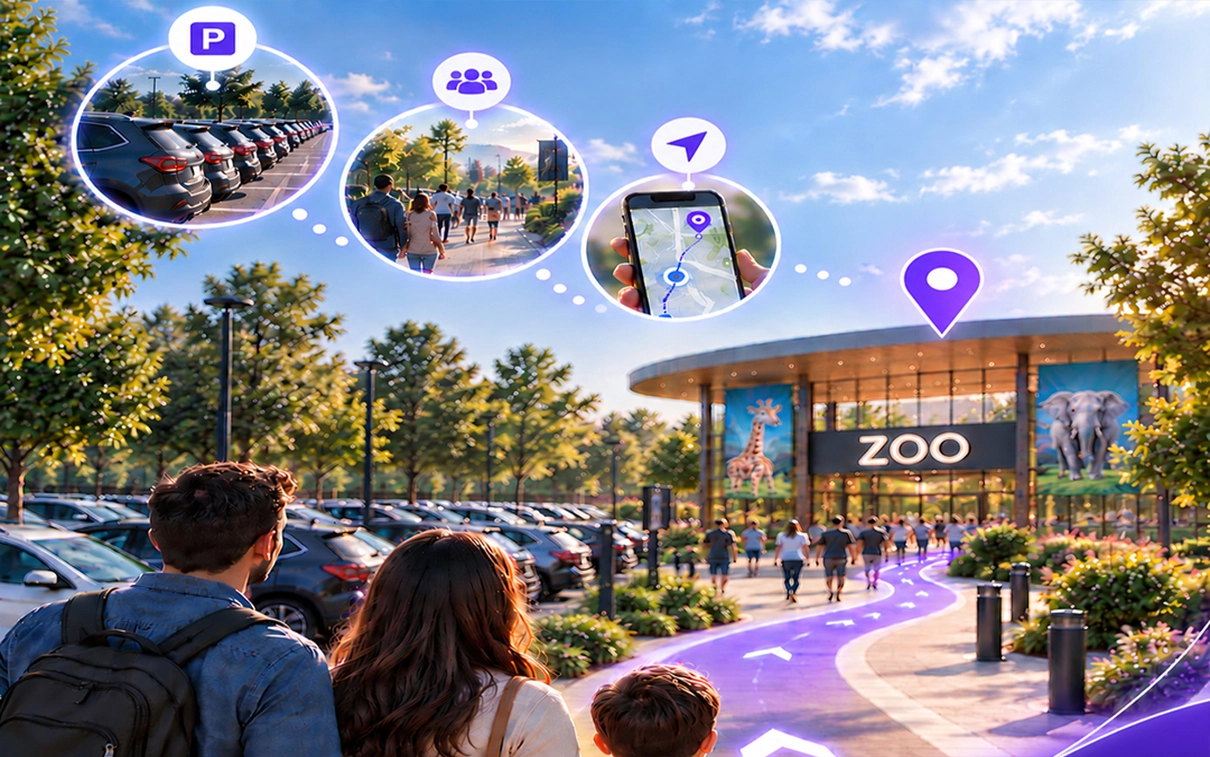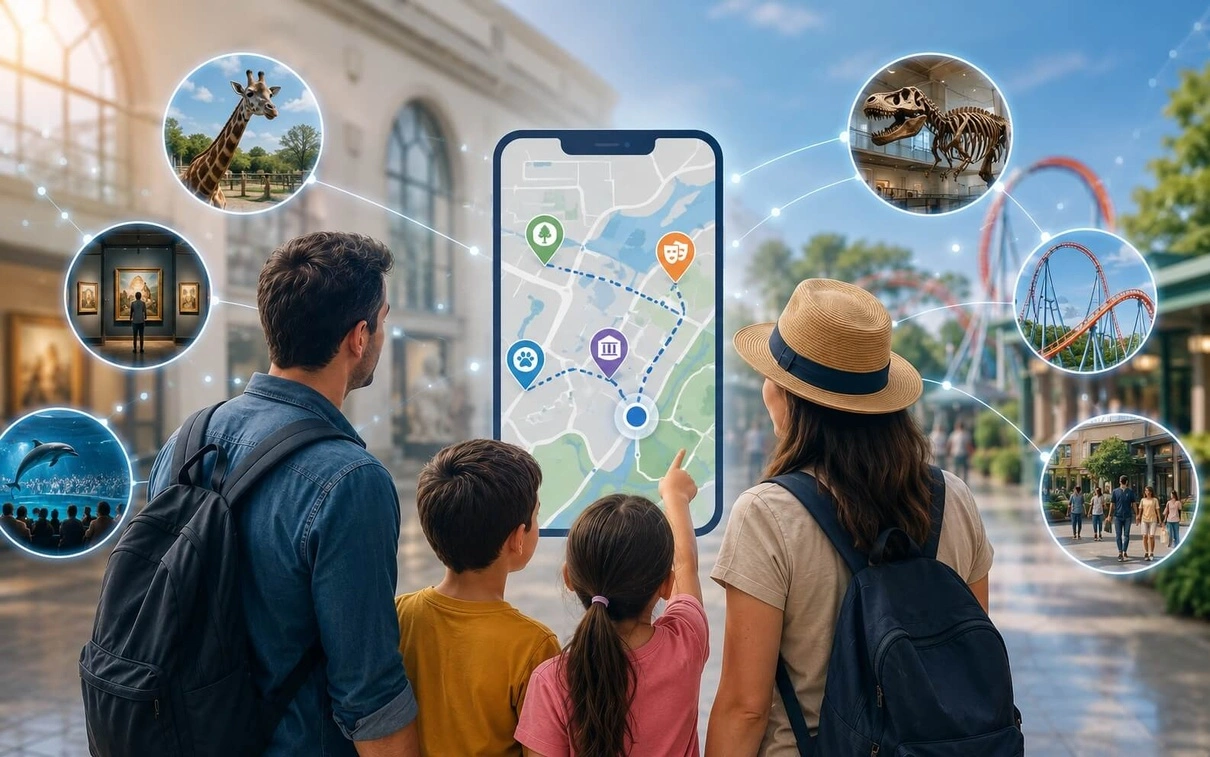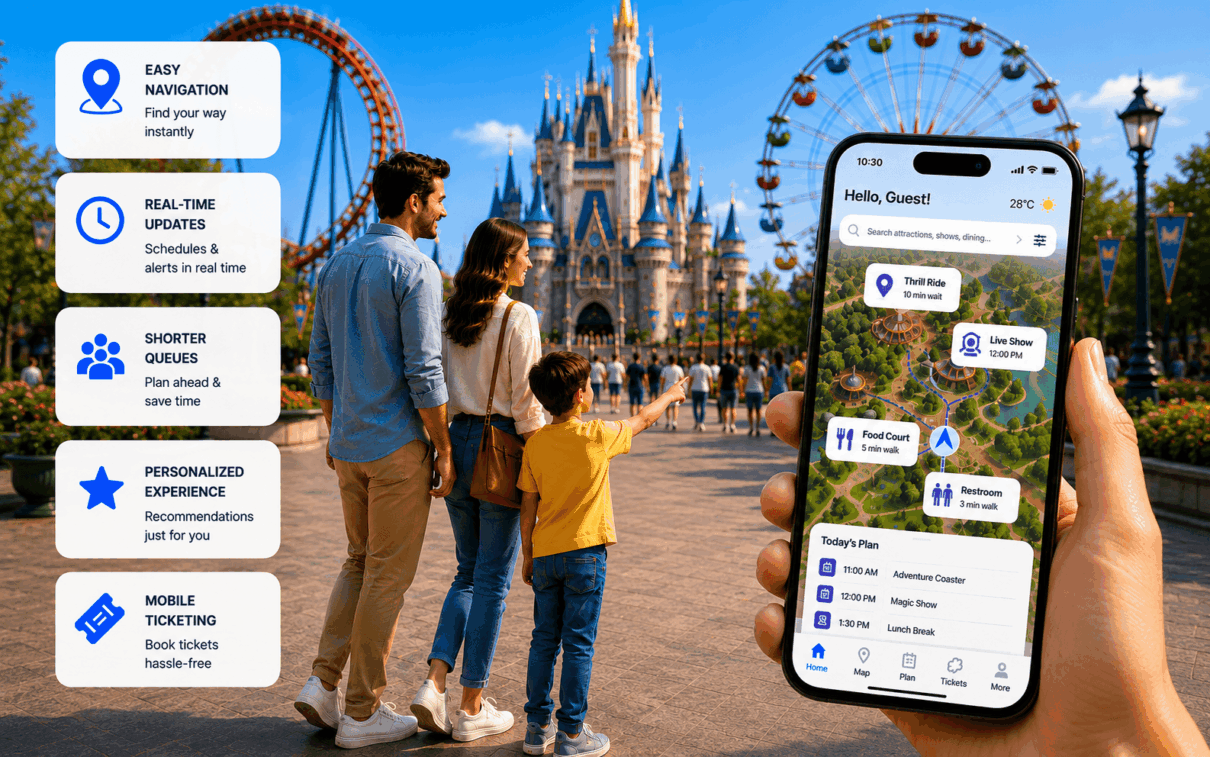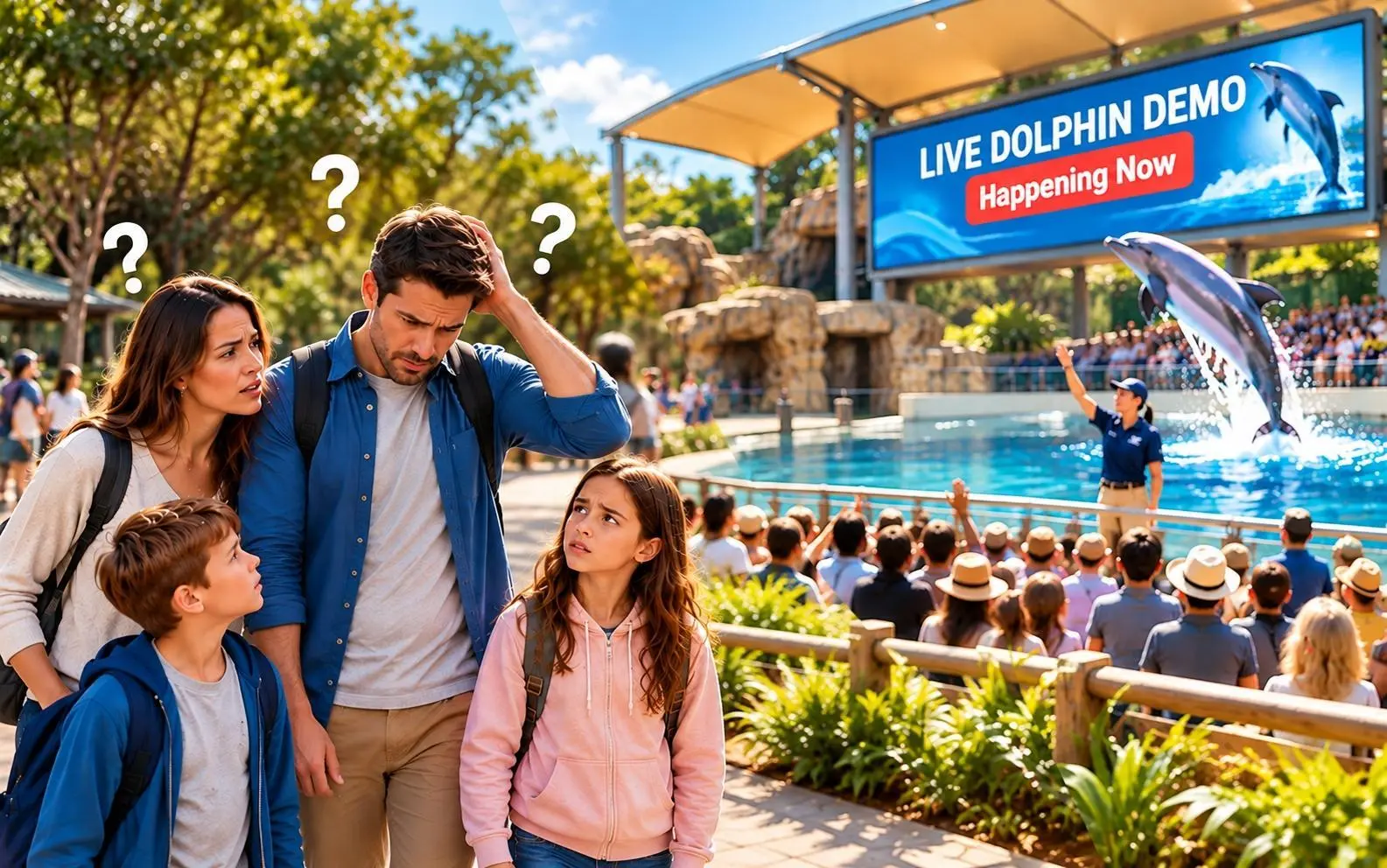
Great programming does not create engagement if the visitor never discovers it.
Executive takeaway
The problem is often not a lack of programming or information. It is a discovery gap between what an organization makes available and what a visitor actually encounters.
A visitor arrives at 10:15 a.m. There is a keeper talk at 10:30, a special exhibit at 11:00, a live demonstration at 11:30, and a popular family activity shortly afterward. The organization has promoted them all. They appear online, on the calendar, and on signs throughout the venue. Staff can answer questions. Yet the visitor misses every one.
This is a familiar problem across visitor-focused organizations. The issue is not necessarily a lack of programming or information. It is often a breakdown between availability and discovery.
Availability does not equal discovery.
A visitor cannot experience something they never discover, and may not act on information that arrives too early, too late, or without context.
That gap matters because organizations invest significant resources in exhibits, events, demonstrations, tours, talks, performances, educational programs, and seasonal experiences. Programming has little value to a visitor who never encounters it.
A traditional event app can centralize schedules, maps, activities, and venue information. A proactive event app goes further: it uses relevant context to reduce the amount of searching a visitor has to do and helps surface experiences when they are most useful.
The strategic question is therefore no longer simply, “Where can visitors find our information?”
It becomes: “How can the experience help visitors discover what matters while they are actually there?”
The Discovery Gap: When Available Experiences Stay Invisible
The Discovery Gap is the distance between what an organization makes available and what a visitor actually encounters.
The scarce resource is often not content. It is visitor attention. Attractions can create more programming than any individual guest can realistically experience. The opportunity is not to expose every option equally, but to help each visitor notice the experiences most relevant to their journey.
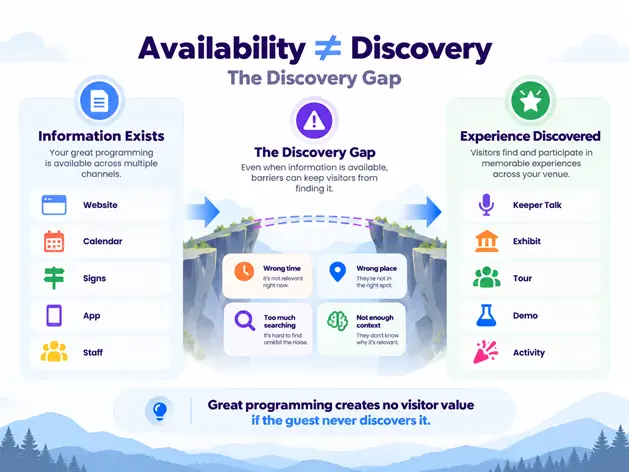
The gap can be created by bad timing, fragmented systems, static wayfinding, changing visitor needs, or friction that the organization cannot easily see. Publishing more information rarely solves all five.
Why an Event App Does Not Automatically Solve Event Discovery
An event app can make schedules, event information, maps, activities, sessions, and other experiences easier to access. But access does not automatically lead to discovery. If visitors still have to know what to search for, where to look, or when to check, the burden remains on them. Research on mobile technology in nature-based tourism has shown that digital tools can support the visitor journey before, during, and after a visit, while also warning that technology can interrupt immersion when it adds friction rather than removing it. That is an important design lesson: the goal is not more screen time. It is more useful guidance at the right moment (Nautiyal et al., 2023).Proactive does not mean more notifications. It means less searching. A proactive experience may appear as a timely card, a map suggestion, an itinerary update, a nearby-event recommendation, or a notification only when that is the most useful channel.
The Four Signals of Relevant Discovery
A proactive experience does not require deep individual profiling. In many visitor settings, useful recommendations can begin with four simple signals:
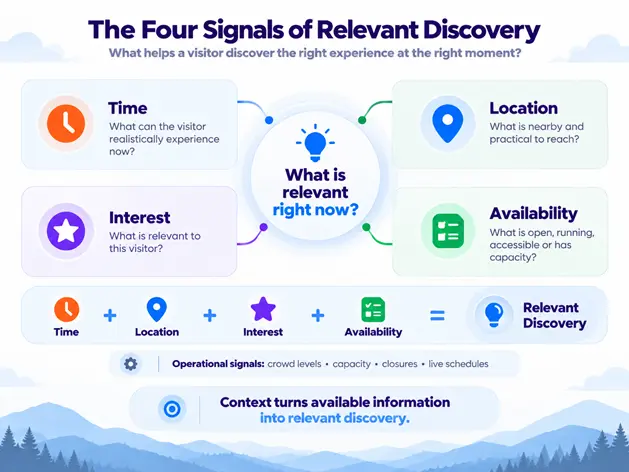
Time asks what the visitor can realistically experience now. Location considers what is nearby and practical to reach. Interest identifies what kinds of experiences are relevant. Availability checks what is actually open, running, accessible, or has capacity.
Availability also creates an operational opportunity. If a popular experience is approaching capacity, temporarily unavailable, or experiencing unusually high demand, the most useful recommendation may be a relevant alternative nearby. This can improve the visitor journey while helping distribute attention more effectively across the venue.
Context changes the response. A visitor near a habitat may be interested in a keeper talk starting in twelve minutes. If it is a six-minute walk away and capacity is available, that event may be the most useful suggestion. If the session is full, the better response may be a nearby exhibit or another talk later in the day.
Reasons Guests Miss Experiences
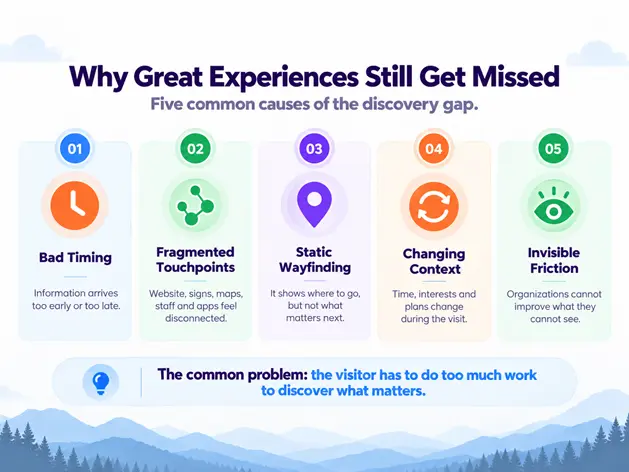
1. Information Arrives Out of Context
A calendar may be useful before a visit. A sign may be useful when someone happens to notice it. A schedule may be technically accurate and still fail to reach the visitor when it matters.
A proactive event app can use the four discovery signals to surface a relevant experience before the moment is lost. Instead of leaving the visitor to repeatedly ask “What should I do next?”, the experience can help narrow the choice set to what is timely, nearby, relevant, and currently available.
Passive information tells visitors what is available.
Proactive discovery helps them decide what to do next.
2. Fragmented Touchpoints Disconnect the Journey
Visitors do not experience an organization through separate departments. They experience one journey. Marketing may promote an event, education may create the content, operations may manage the location, and digital teams may manage the app. The visitor sees none of those boundaries.
If the schedule is in one place, the map in another, event details elsewhere, and directions depend on staff or signage, the journey becomes harder than it needs to be.
A 2023 systematic review of 122 studies on technology and museum visitor experiences found that research has evolved beyond basic learning and interaction toward concepts including intention, behavior, satisfaction, enjoyment, and virtual presence. The broader lesson is that digital technology is increasingly evaluated as part of the total visitor experience, not simply as an information channel (Lu et al., 2023).
A connected event experience should therefore bring schedules, content, maps, directions, and relevant visitor actions together so the guest can move from discovery to participation without crossing unnecessary digital seams.
3. Static Wayfinding Answers “Where?” but Not “What Next?”
Traditional wayfinding starts with an important question: “Where is it?” For visitor experience, that is only the beginning.
Contextual wayfinding can connect location, timing, content, and visitor intent. Instead of simply directing someone to an auditorium, habitat, or gallery, the experience can explain what is happening there, when it begins, whether there is still time to reach it, and what alternatives are nearby.
Directional evidence from other complex physical environments supports the value of digital wayfinding. In a 2025 hospital study with 54 usability-test participants, 87% reported reduced navigation time and 83.3% reported reduced psychological stress after using a digital indoor wayfinding application. Healthcare environments differ significantly from leisure attractions, so these findings should not be treated as direct evidence for event discovery. They do, however, illustrate a broader principle relevant to complex physical environments: reducing navigation friction can make the journey easier for the person moving through it (Salins et al., 2025).
Move from helping visitors find places to helping them discover experiences.
Wayfinding becomes more valuable when it connects the map with what is happening, what is relevant, and what can still be experienced.
4. Visitor Needs Change During the Visit
Published schedules assume visitors will organize themselves around the venue timetable. Real visits are more fluid. People arrive late, change plans, take breaks, split into groups, discover new interests, encounter closures, or simply realize they have less time than expected.
A family with 90 minutes left may want a very different recommendation from a repeat visitor with the afternoon available. A conference attendee may have a 30-minute gap between sessions. A museum visitor with mobility needs may prioritize an accessible route rather than the shortest route.
This is why personalization does not always require a sophisticated profile. Often, recognizing the current situation is enough to make the next recommendation more useful.
5. Visitor Friction Is Often Invisible
An event app should not only help visitors discover experiences. It can also help organizations understand where discovery is breaking down.
When designed with appropriate visitor-experience analytics, an app can show which events people view, search for, save, navigate toward, or ignore. These signals do not prove why a visitor behaved a certain way, but they can identify where to investigate.
Strong promotion but low in-app discovery may indicate a visibility problem.
High event views but low navigation starts may point to timing, distance, capacity, or unclear calls to action.
Repeated searches for the same information may reveal content or navigation friction.
A popular event that reaches capacity early may indicate demand for an alternative or additional session.
The value is not collecting more data. It is using visitor behavior to identify where discovery, navigation, relevance, or engagement can be improved.
How Proactive Event Discovery Works
The distinction between a traditional digital experience and a proactive one can be summarized simply:
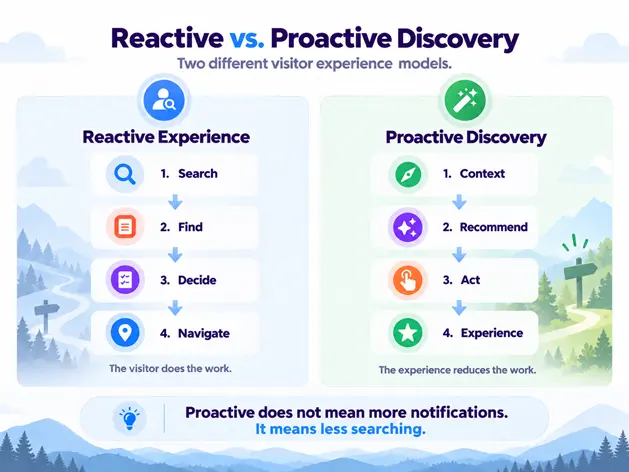
In a reactive journey, the visitor must Search → Find → Decide → Navigate. In proactive discovery, the sequence shifts to Context → Recommend → Act → Experience.
Proactive guidance does not require constant push notifications. Relevance can appear quietly through a changing home screen, a nearby recommendation on the map, an itinerary update, or contextual content that becomes available as the visitor moves through the venue. Push notifications are simply one delivery option when timing makes them useful.
A 2025 study of 238 event-mobile-app users in Spain found that flow experience, experience co-creation, and perceived privacy risk all influenced continued app use. The study does not evaluate proactive discovery specifically, but it reinforces a broader point: event apps create value when the experience feels useful and engaging while maintaining appropriate trust and privacy expectations (Marinković et al., 2025).
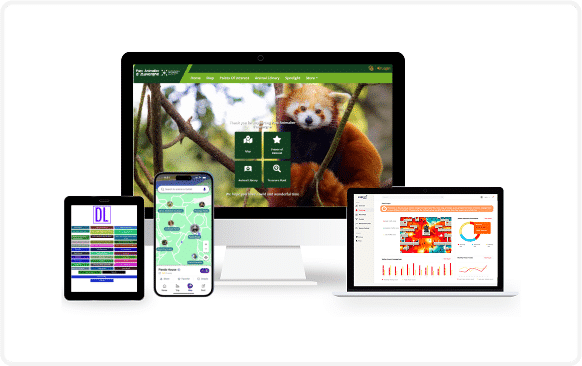
What Proactive Discovery Looks Like Across Venues
Different venues create different visitor needs, but the underlying principle is the same: use context to reduce search effort and make relevant experiences easier to act on.
Venue | What the App Can Surface | Visitor Outcome |
Zoos & Aquariums | Nearby keeper talks, feeding times, habitats, and family activities based on timing, walking distance, and availability. | More timely discovery |
Museums & Science Centers | Related exhibits, demonstrations, talks, and accessible routes based on visitor interests and current location. | More connected exploration |
Shows, attractions, entertainment, and alternative experiences that fit the guest’s remaining time and operating conditions. | Less wasted time | |
Conferences & Trade Shows | Relevant exhibitors, sessions, demos, and networking opportunities between scheduled commitments. | Better agenda use |
Tourism Destinations | Nearby points of interest, tours, cultural events, and experiences that fit the visitor’s time and interests. | More spontaneous exploration |
Historic Sites & Trails | Stories, tours, interpretive stops, and scheduled programming tied to where the visitor is on the journey. | Deeper place-based discovery |
The Executive Question: Is Your Event App Reactive or Proactive?
Executives evaluating visitor-experience technology should move the discussion away from feature counts and toward journey outcomes. Ask:
- Does the experience help visitors discover, or only search?
- Does it understand useful context, or simply display information?
- Does it connect schedules, maps, content, and existing systems, or create another isolated digital layer?
- Does it help visitors make decisions during the visit, when plans are changing?
- Can the organization see where discovery, navigation, or participation may be breaking down?
- Can visitors understand and control how location, preferences, or other contextual signals are used?
These questions shift the technology conversation back to business outcomes: better discovery, less visitor effort, more useful navigation, stronger participation, and more actionable insight.
The Pigeon-Tech Perspective
Pigeon-Tech approaches event discovery as part of the broader visitor journey. Schedules, maps, navigation, content, recommendations, and engagement should not operate as disconnected tools.
The goal is to reduce the effort between “What’s happening?” and “I’m there.”
That can mean connecting existing venue information and systems with interactive maps, personalized tour planning, event discovery, contextual guidance, and visitor analytics rather than requiring organizations to replace everything they already use.
The technology should remain in the background. The visitor should simply experience a journey that feels easier to understand, easier to navigate, and more responsive to what is happening now.
A Practical Starting Point
Organizations do not need to transform the entire visitor journey at once. A better starting point is one high-value question:
START WITH ONE EXPERIENCE
One keeper talk. One exhibit. One session. One discovery problem.
Which experience do we most want visitors to discover, and where does the journey currently break down?
Map that journey. Identify where visitors lose information, direction, context, or time. Then test one connected intervention.
For example, a zoo could test discovery of one keeper-talk program across a small number of habitats. Measure whether contextual surfacing changes event views, navigation starts, arrival rates, or visitor feedback. A focused Proof of Concept can reveal whether proactive guidance changes discovery and engagement before the organization commits to a broader transformation.
Great Programming Only Matters When Guests Discover It
Missed events are rarely solved by publishing more information. They are solved by reducing the Discovery Gap between what an organization offers and what a visitor can realistically notice, understand, reach, and act on during the visit.
The most effective digital experiences do not simply give guests more choices. They make the right choices easier to discover.
The objective is not to make technology more visible. It is to make the visitor experience more responsive.
Connected Experiences. Better Journeys.
If your organization has strong programming that visitors are still missing, a focused Proof of Concept can be a practical place to start.
Frequently Asked Questions
A proactive event app goes beyond displaying schedules and venue information. It uses context such as time, location, interests, and current availability to surface relevant events or activities when they are most useful to the visitor.
A traditional event app primarily helps visitors search for and access information. A proactive event app can also use context to help surface what is relevant now, reducing the need for repeated searching.
An event app can bring schedules, maps, activity details, directions, and recommendations into one digital experience. When those elements are connected, visitors can move more easily from discovering an event to deciding whether it fits their visit and navigating to it.
Useful signals can include current location, time, explicit interests, remaining visit time, event capacity, temporary closures, operating status, and live schedules. The goal is not necessarily deep profiling; it is making the next recommendation more relevant to the current situation.
Potential benefits include better event discovery, less search effort, more useful navigation, stronger participation in existing programming, and better use of a visitor’s limited time.
Yes. Appropriate analytics can show which experiences visitors view, search for, save, navigate toward, or ignore. These patterns can help teams investigate potential gaps in visibility, timing, navigation, capacity, content, or relevance.