From First Click to Full Tour: How Better Planning Creates Better Visitor Experiences

The visitor journey starts before arrival. Learn how attractions can turn pre-visit intent into smarter planning, navigation, discovery, and engagement.

Long before guests step through the gate, they have already started shaping the visit.

A parent checks whether the family can make the morning sea lion feeding. A couple compares exhibits to decide what they would enjoy most. A first-time visitor scans the highlights and tries to work out what can realistically fit into a few hours.

The visit has not started physically, but decisions are already being made: What should we see? Where should we start? What can we fit into our time?

That creates an important question for attraction leaders: what happens between the first click and the first step through the gate?

Information is not the same as a plan.

The Planning Gap

Attractions already publish exhibit lists, maps, schedules, dining options, operating hours, ticket information, and special-event details. The information may be complete, yet visitors still have to decide what matters to them, what fits their available time, and how those choices fit together.

Consider a family planning a three-hour visit to a large zoo. They may have dozens of habitats, scheduled programs, restaurants, play areas, and special experiences to choose from. The difficult part is not finding information. It is deciding what to do with it.

Which exhibits should come first? Which programs fit the available time? Which experiences are close together? What can be skipped without making the day feel rushed?

That gap between information access and experience planning is where a stronger pre-visit journey can create real value.

Four Signals That Shape a Better Plan

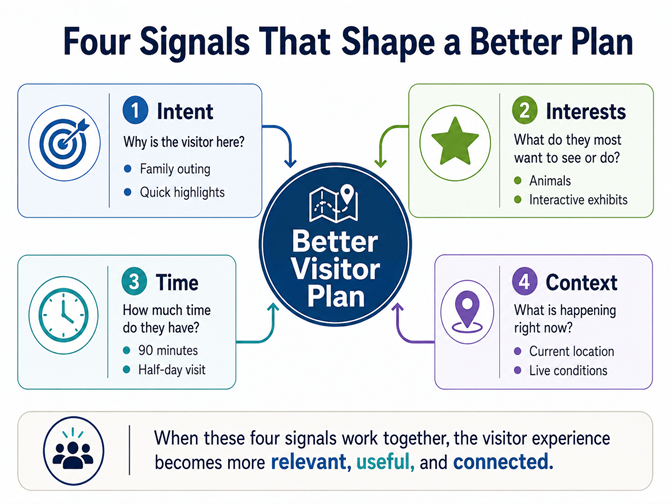
The first digital interaction can reveal useful signals about what a visitor is trying to accomplish. A search for big cats may suggest an interest in wildlife. Checking children’s activities may signal a need for family-friendly options. Looking at a two-hour itinerary may reveal a time constraint.

Used responsibly, these signals do not require an attraction to know everything about an individual. Consent-based and aggregated behavior can help teams understand enough to make planning more useful.

Signal

Planning Question

Intent

What does the visitor want to accomplish?

Interests

Which experiences matter most to them?

Time

How long do they realistically have?

Context

What is happening around them that could affect the plan?

The opportunity is not to profile visitors excessively. It is to use the signals they willingly provide to reduce decision-making friction and help them build a visit that better fits their needs.

From Browsing to Building a Tour

Imagine two visitors arriving at the same museum. One has 90 minutes and wants the highlights. The other has half a day and wants to explore one collection in depth.
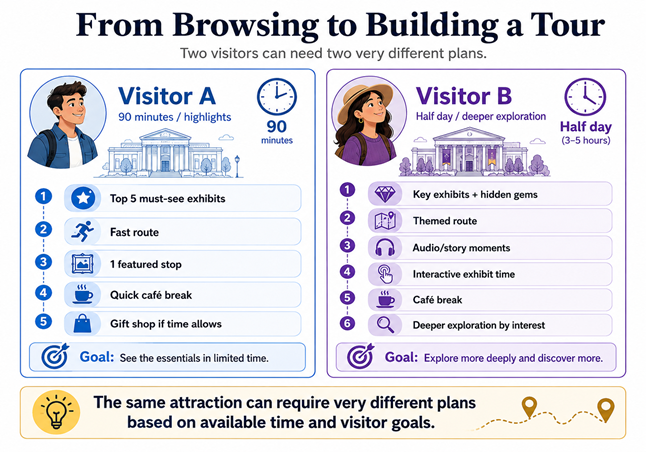
A traditional digital experience may give both visitors the same map and the same gallery list. A planning-focused experience can respond differently. The first visitor could receive a focused route covering key works and nearby highlights. The second could receive a longer journey with additional collections, learning opportunities, and recommended stops.

The physical museum has not changed. The experience has.

This is the shift attraction leaders should pay attention to: the same physical environment can become more relevant when digital planning reflects intent, interests, time, and context.

MarketsandMarkets identifies personalized and adaptive experiences as an emerging trend in location-based entertainment and projects the global market to grow from $5.47 billion in 2024 to $15.33 billion by 2029. The strategic implication is not that every guest needs a completely different attraction. It is that digital planning can help more visitors get greater value from the experience that already exists.

A Good Plan Should Leave Room for the Unexpected

The best visitor plans provide structure without becoming rigid. Real visits rarely follow a perfect schedule. An exhibit may be crowded, a child may want to stay longer at one habitat, an event may change, or visitors may discover something they did not expect to enjoy.

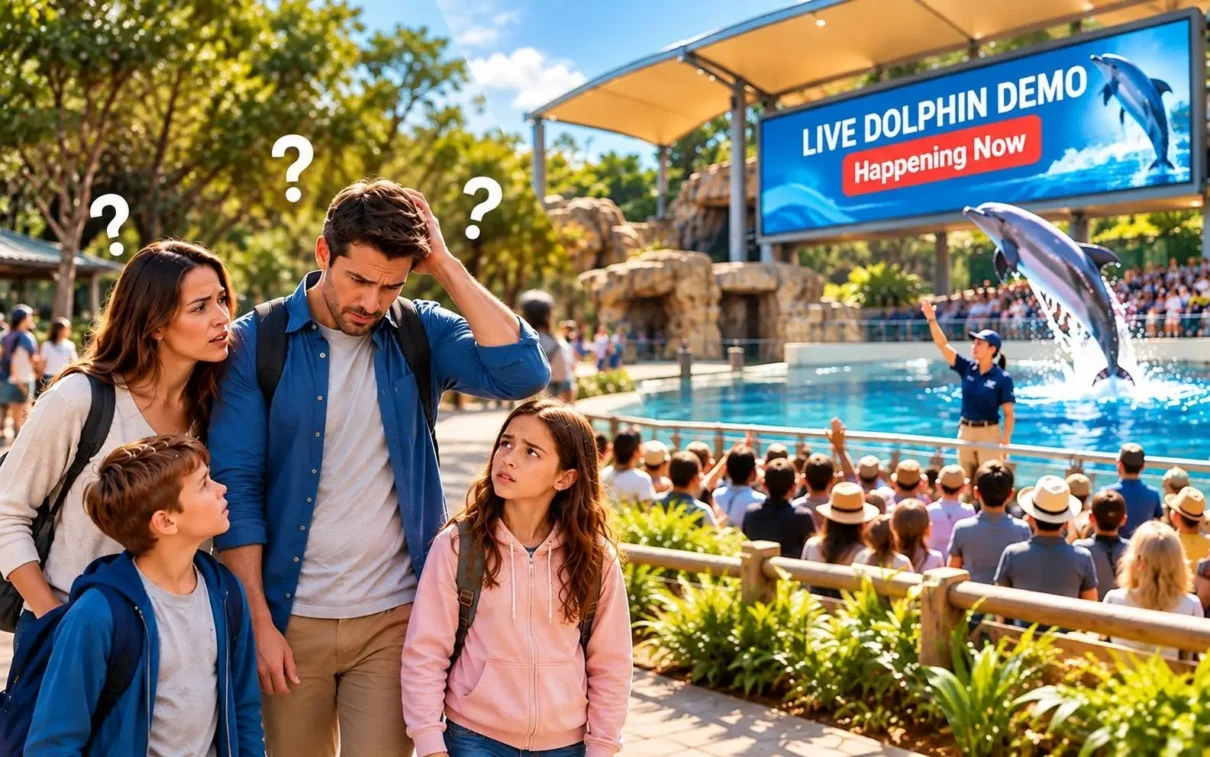
A useful plan therefore needs to answer two questions: Where should I go next? And what should I do when the plan changes?

This is where a connected digital experience becomes more valuable than a static itinerary. The objective is not to dictate the visit. It is to reduce the friction involved in deciding what to do next.

What Better Planning Can Unlock
  • Increase Discovery: Help visitors find experiences beyond the most familiar highlights.
  • Improve Time Utilization: Reduce time spent deciding and create more time for engagement.
  • Distribute Visitor Demand: Introduce less prominent experiences and reduce overreliance on high-traffic areas.
  • Strengthen Engagement: Connect visitors with relevant exhibits, programs, amenities, and content.
  • Generate Visitor Insight:Use planning behavior to better understand interests and improve future experience design.
The Plan Should Continue After Arrival

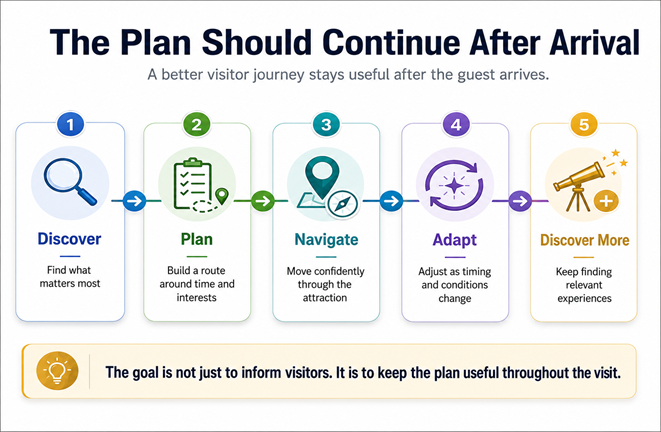
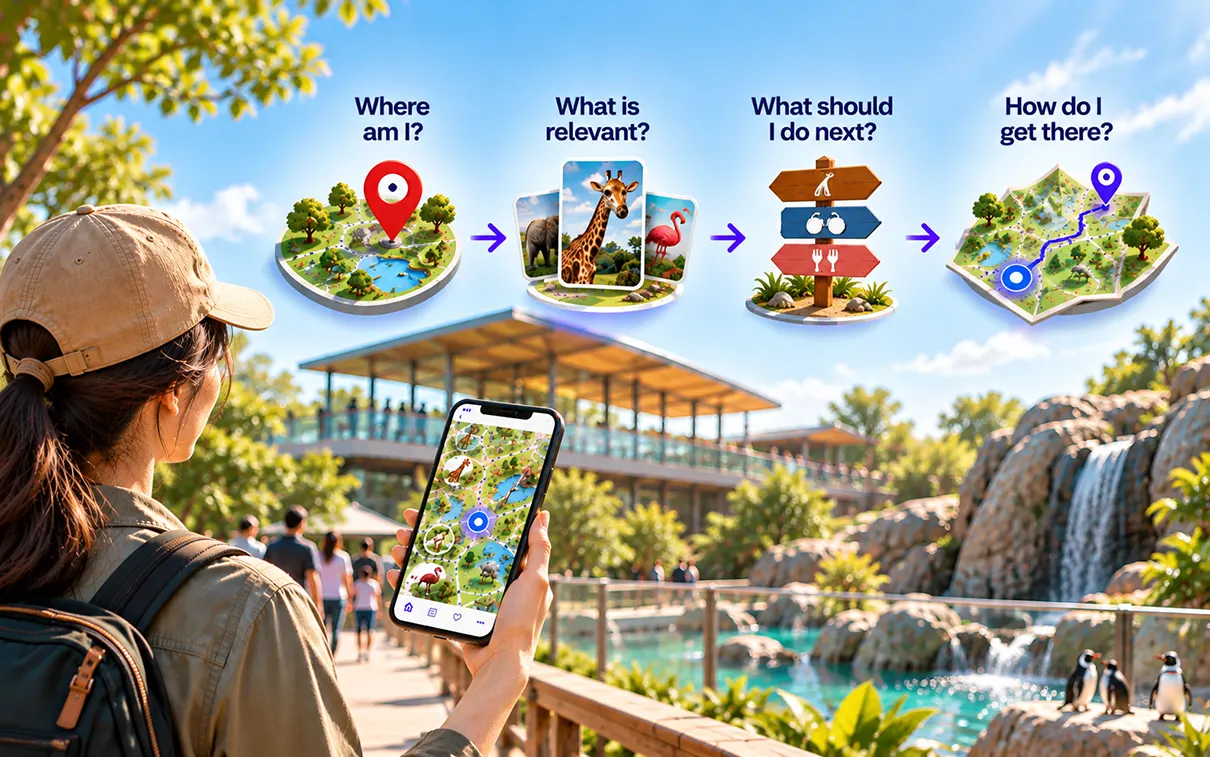
Pre-visit planning creates the most value when it remains useful after guests arrive. A plan built at home should not become irrelevant at the entrance.

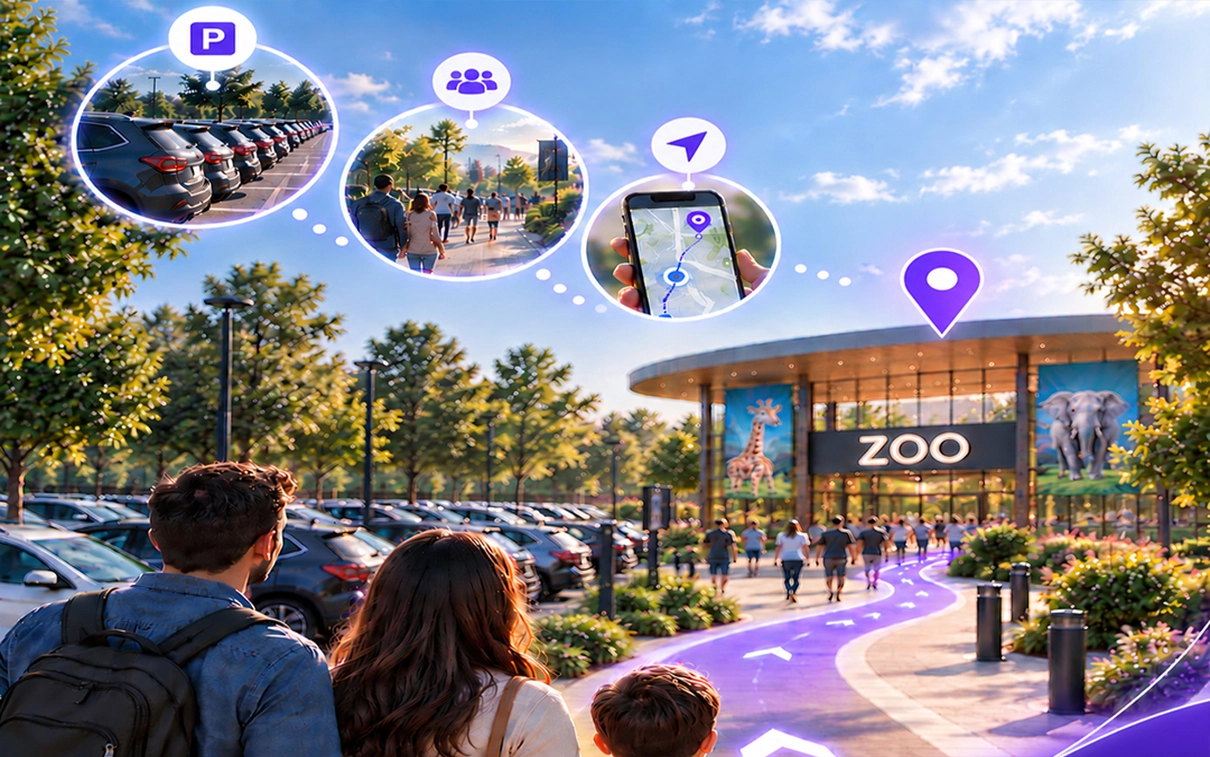
It can connect with navigation, real-time information, exhibit content, scheduled experiences, amenities, and discovery throughout the property. A visitor who planned to see a particular animal could receive directions when they arrive. If an area becomes crowded, the experience could suggest an alternative. If the visitor discovers something unexpected, the journey can adapt.

The technology should work quietly in the background, making the physical experience easier to understand and explore rather than demanding constant attention.
What This Looks Like Across Attractions
Zoos and Aquariums

Families may want to see specific animals, attend feedings, visit children’s areas, and stop for lunch. The challenge is fitting meaningful experiences into limited time. Planning can help prioritize what matters most without turning the day into a rigid schedule.

Museums and Science Centers

Some visitors want highlights, others seek specific collections, and students may want learning-focused experiences. Better planning can make the same physical space feel more relevant to very different visitor goals.

Theme and Water Parks

Guests balance rides, shows, dining, wait times, and events. A connected plan can help them adjust those choices as conditions change rather than repeatedly rebuilding the day themselves.

The Executive Shift: From Digital Tools to Experience Design

This is where attraction leaders should broaden the conversation.

The question is not: “Do we need a better app?”  The better question is: “How connected is the experience we are giving visitors?”
 

Visitors do not experience an attraction as a collection of systems. They experience one journey, even when the organization manages that journey across separate technologies and teams.

  • Does what visitors discover before arrival help them once they enter?
  • Can a plan created at home remain useful and adaptable on-site?
  • Are we helping visitors discover experiences or simply telling them where things are?
  • What can visitor choices teach us about demand, behavior, and future experience design?
These are not simply technology questions. They are experience-design questions.
The Pigeon-Tech Perspective

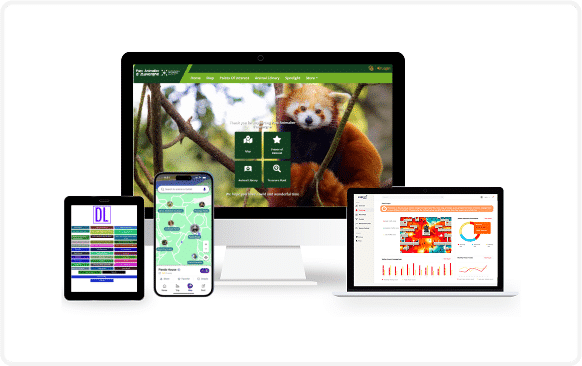
Pigeon-Tech applies this connected-journey approach by linking pre-visit planning with navigation, discovery, engagement, and visitor intelligence once guests arrive.

Its Smart Tour Guide capability can help visitors shape an experience around their available time, interests, and preferences, then carry that plan into the on-site journey rather than forcing them to start over at the gate.

The objective is not to replace every system an attraction already uses. It is to help create a more connected experience around the visitor while preserving the investments operators already rely on.

The strongest digital experiences are often the ones visitors barely notice. They simply make the physical experience easier to understand, easier to navigate, and more relevant.

Executive Takeaway

The first click can influence what happens hours or days later. A search can become a plan. A plan can become a route. A route can lead to discovery and engagement. Those interactions can then generate insight that helps attractions improve future experiences.

The opportunity is not to give visitors more information. It is to help them turn information into intent, intent into a plan, and the plan into a better visit.

From the first click to the full tour, every interaction should help visitors get more from the experience the attraction has already created.

A Practical Next Step

Attractions do not need to transform their entire digital ecosystem to test this approach. A focused pilot can be enough.

Start with one visitor segment, one experience, and one measurable problem: missed high-value exhibits, low discovery of secondary experiences, difficulty planning within limited time, or friction moving between scheduled activities.

Then measure whether a more purposeful planning experience changes what visitors discover, how they move, and how effectively they use their available time.

The goal is not to add another digital layer. It is to make the existing attraction easier to discover and easier to enjoy — because the full tour may begin with nothing more than a first click.

Request a Demo

Discover new possibilities with our innovative solutions.