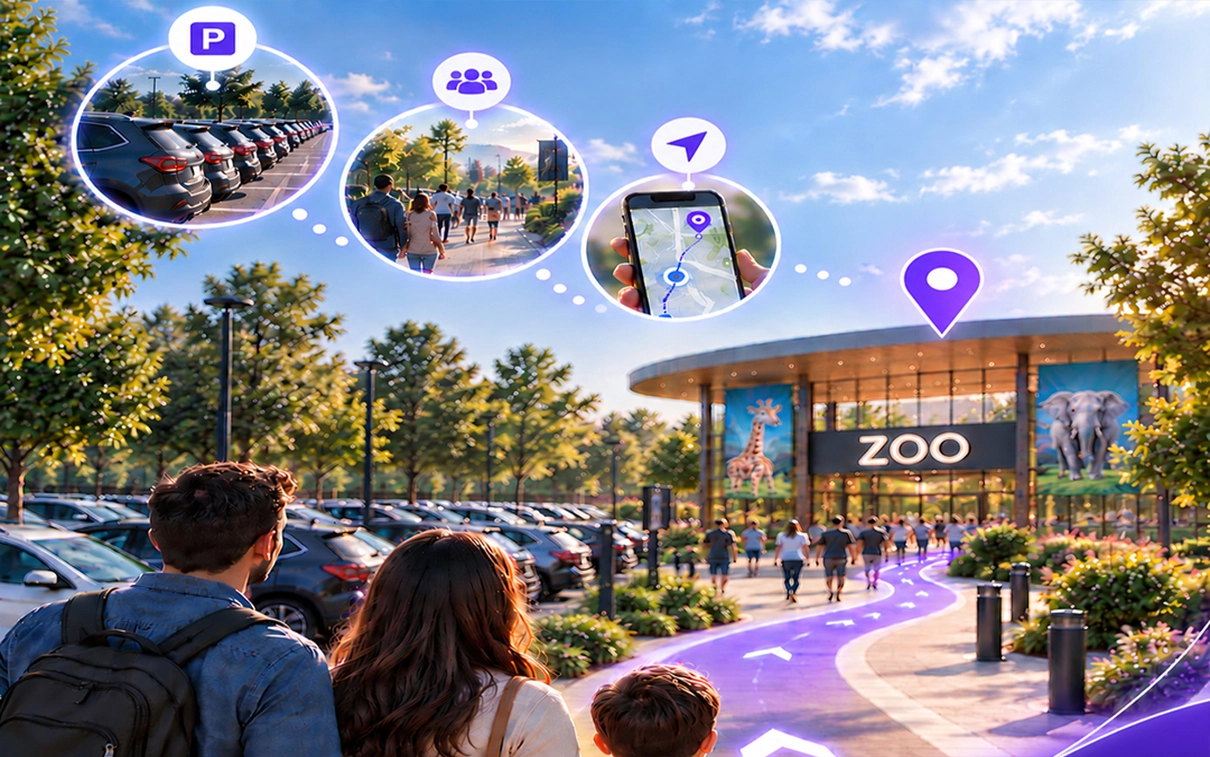
A visitor can spend weeks looking forward to a museum exhibition, a family day at a theme park, a major sporting event, or a conference. Then they arrive, and the first challenge begins: Where should I park, which entrance should I use, and how do I get from the car to the experience I came for?
For many organizations, parking is treated primarily as an operational requirement. Visitors experience it differently. Parking is often their first interaction with the physical destination, and uncertainty at arrival can create friction before the experience itself has even begun.
The visitor experience does not begin at the entrance. It begins when the visitor starts trying to find it.
Parking navigation is more than a transportation problem. It is a confidence problem.
The Business Problem: Arrival Sets the Tone
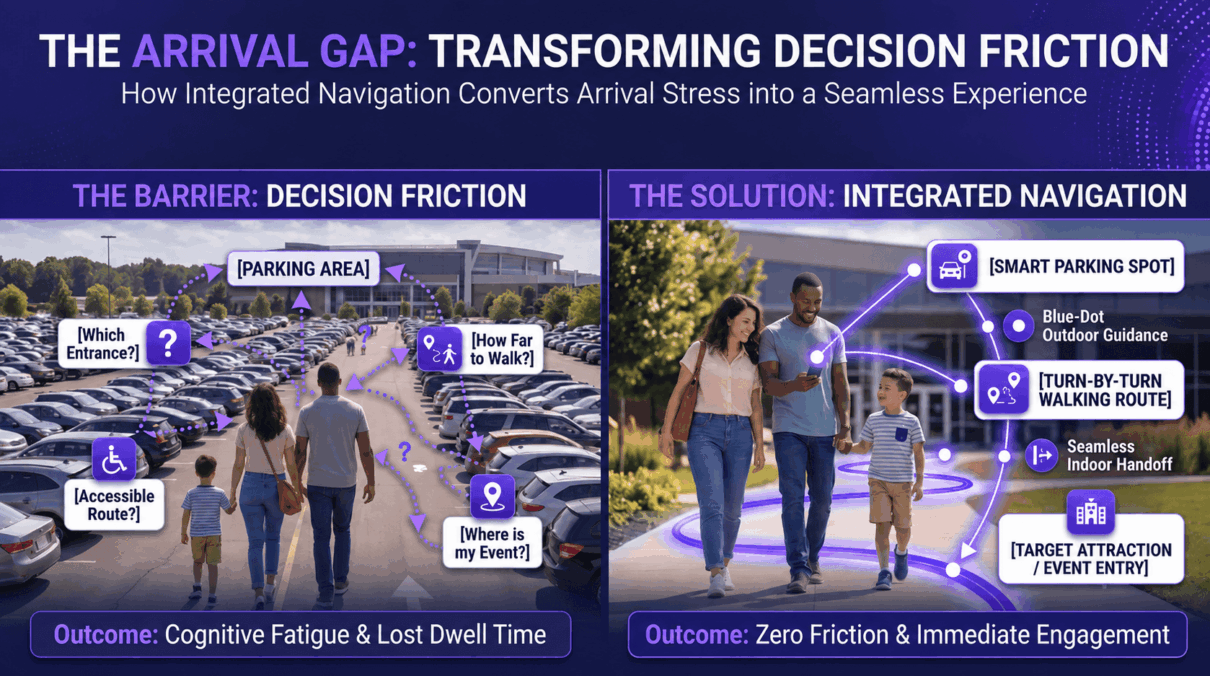
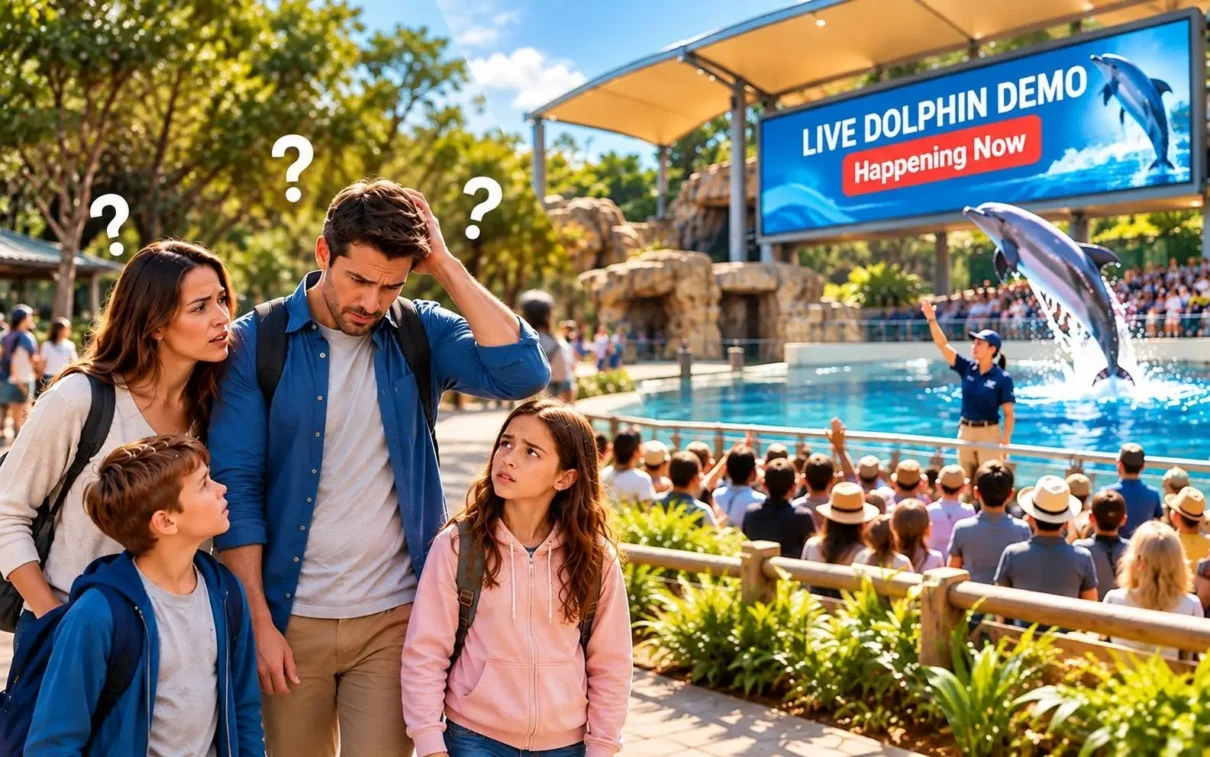
Large visitor destinations can be difficult to navigate, particularly for first-time guests. Multiple parking areas, entrances, buildings, attractions, event spaces, and walking routes can turn what should be a simple arrival into a series of decisions.
Finding a parking space does not necessarily mean the visitor knows what to do next. They may still need to determine which entrance is appropriate, how far they need to walk, whether an accessible route is available, and which path leads to the attraction, exhibit, event, or facility they came to visit.
Individually, these seem like small decisions. Together, they create decision friction at precisely the moment when an organization wants visitors to feel welcomed and ready to begin their experience.
Navigation is not separate from the visitor experience. Navigation is part of the experience, and parking is often the first major navigation decision.
Why Static Parking Guidance Cannot Carry the Whole Journey
Most destinations already have parking signs. The limitation is not necessarily a lack of signage; it is that static signs answer only the question presented at one fixed point.
A sign might say “LOT A →,” while a visitor is actually wondering whether Lot A is closest to the right entrance, whether there is an accessible route, what happens after parking, or how they will find their way back later.
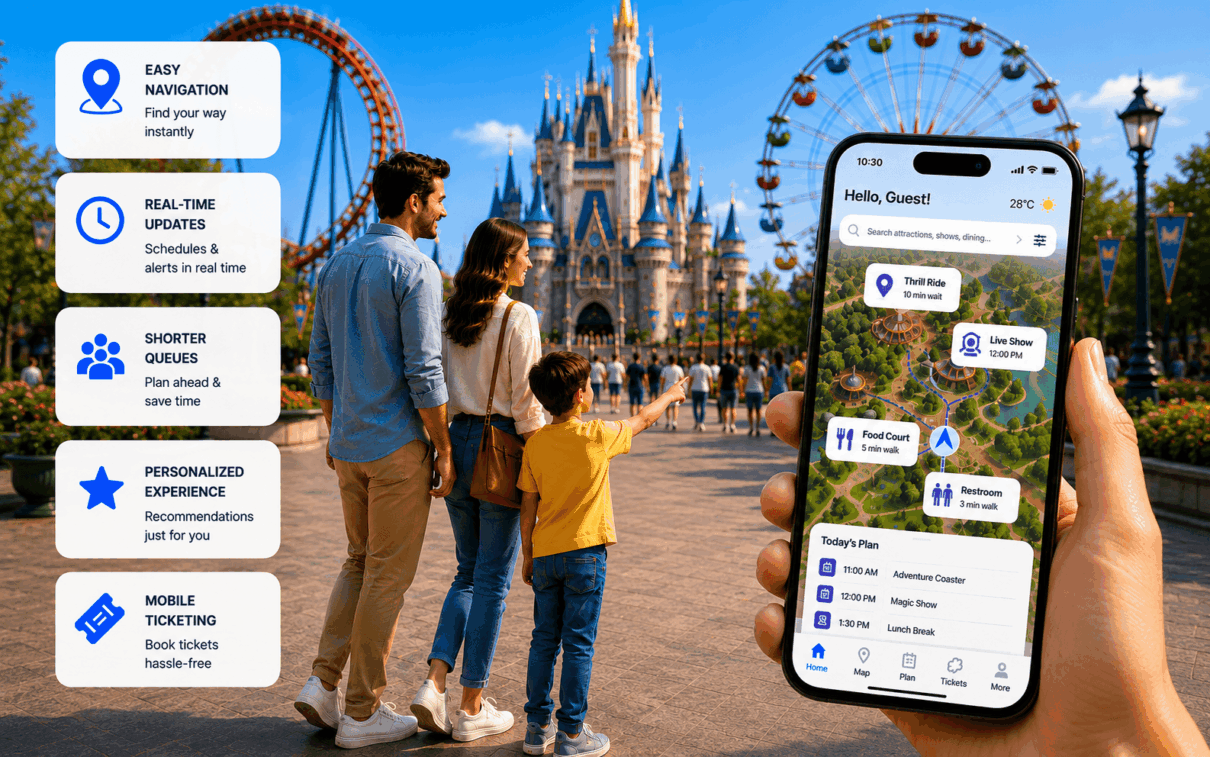
Physical signage remains essential. Digital wayfinding can complement it by connecting parking with entrances, amenities, attractions, events, and other destinations through mobile-accessible guidance. The value is not merely showing where a parking lot is, it is helping the visitor understand what comes next.
Finding Your Way Is Not the Same as Knowing Your Way
Experience A: Find Your Way
A visitor arrives, follows parking signs, chooses a lot, and parks. Then they look for the entrance, check another sign, and ask someone which direction to walk.
Eventually, they arrive. Nothing went seriously wrong, but the visitor had to solve several avoidable problems.
Experience B: Know Your Way
Before arriving, the visitor can understand the destination layout and identify an appropriate parking area. After parking, a digital map helps them orient themselves and connect their location with the relevant entrance, route, amenities, or destination.
Instead of thinking about the venue’s infrastructure, they can focus on the reason they came.
Finding your way means eventually reaching the destination. Knowing your way means moving through the experience with confidence
Design the Journey, Not Just the Map
Executives often evaluate wayfinding by asking, “Can visitors find their way?” A more useful question is: “How much effort does it take for visitors to feel certain they are going the right way?”
That shifts the objective from providing directions to reducing cognitive effort across the visitor journey.
Arrival → Parking → Entrance → Destination → Exploration → Departure
Parking should not be treated as an isolated layer on a map. It can become the first chapter of a connected visitor journey.
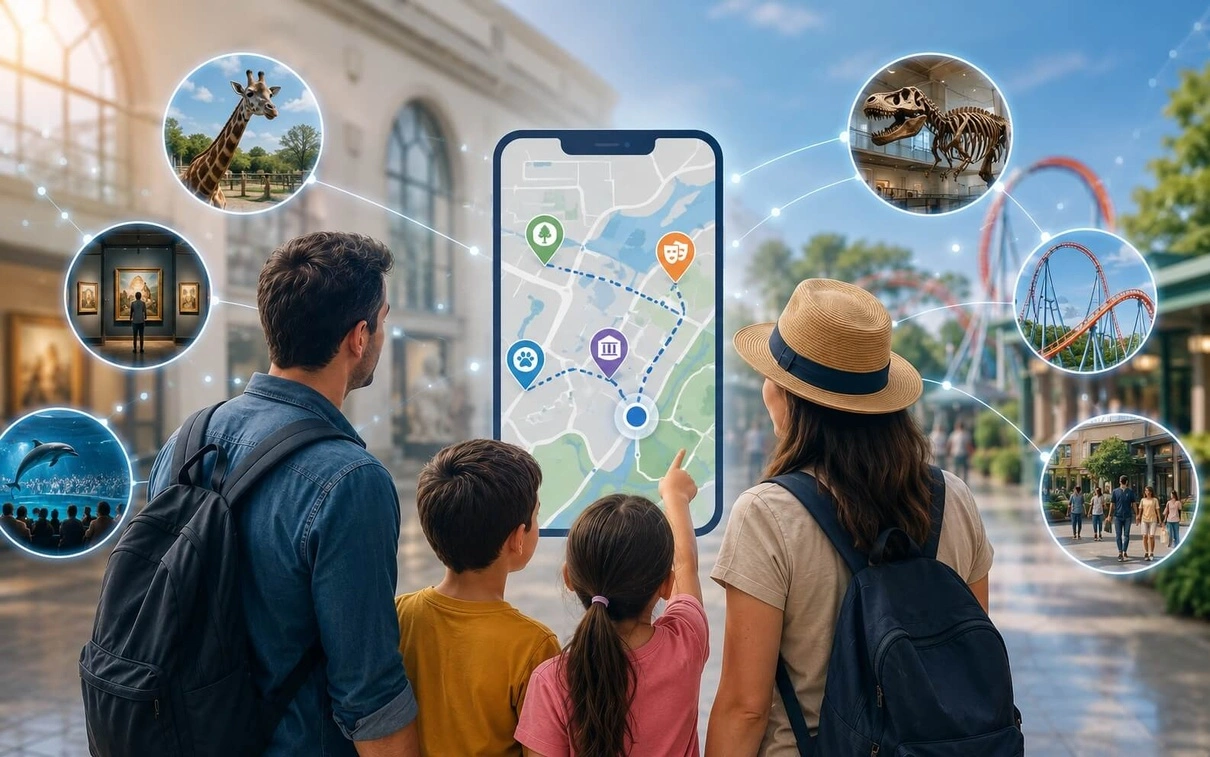
A family visiting an exhibit may need parking, an entrance, an accessible route, restrooms, dining, and the exhibit itself. A conference attendee may need a parking area, registration entrance, meeting room, exhibitor booth, and networking event.
The destinations differ, but the underlying problem is similar: people should not have to understand an organization’s physical infrastructure to enjoy the experience it provides.
What Digital Parking Navigation Can Change
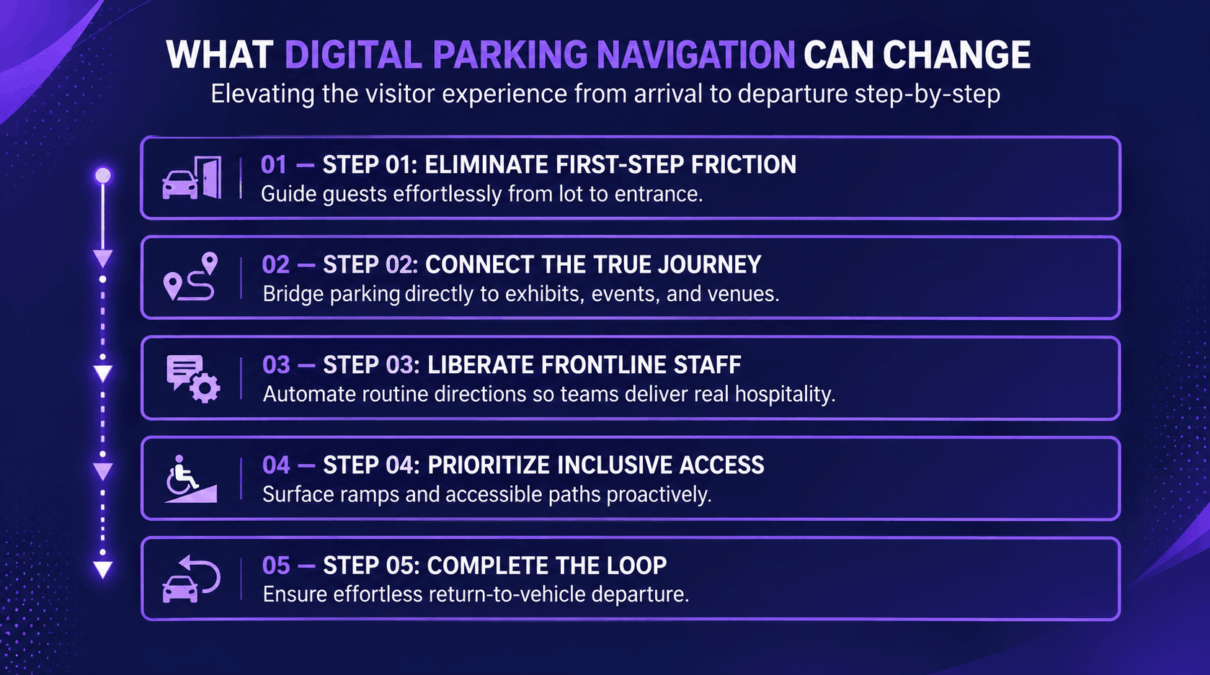
- Reduce decision friction. Help visitors understand the relationship between parking, entrances, amenities, and destinations before and during the visit.
- Connect parking to the actual destination. Parking is rarely the destination. Digital wayfinding can connect the lot to the exhibit, gate, conference hall, trailhead, restaurant, or event the visitor actually wants.
- Reduce routine direction requests. When visitors repeatedly ask where to park, which entrance to use, or how to reach a destination, frontline staff become part of the navigation system. Digital guidance can handle many routine questions so employees can focus on higher-value interactions.
- Support accessible journeys. Accessible entrances, ramps, elevators, amenities, and appropriate routes can be surfaced as part of the journey rather than discovered only after a visitor encounters a barrier.
- Include departure. The visitor experience does not end at the exit. Return-to-parking guidance can provide continuity from arrival through departure.
The Opportunity Across Visitor Destinations
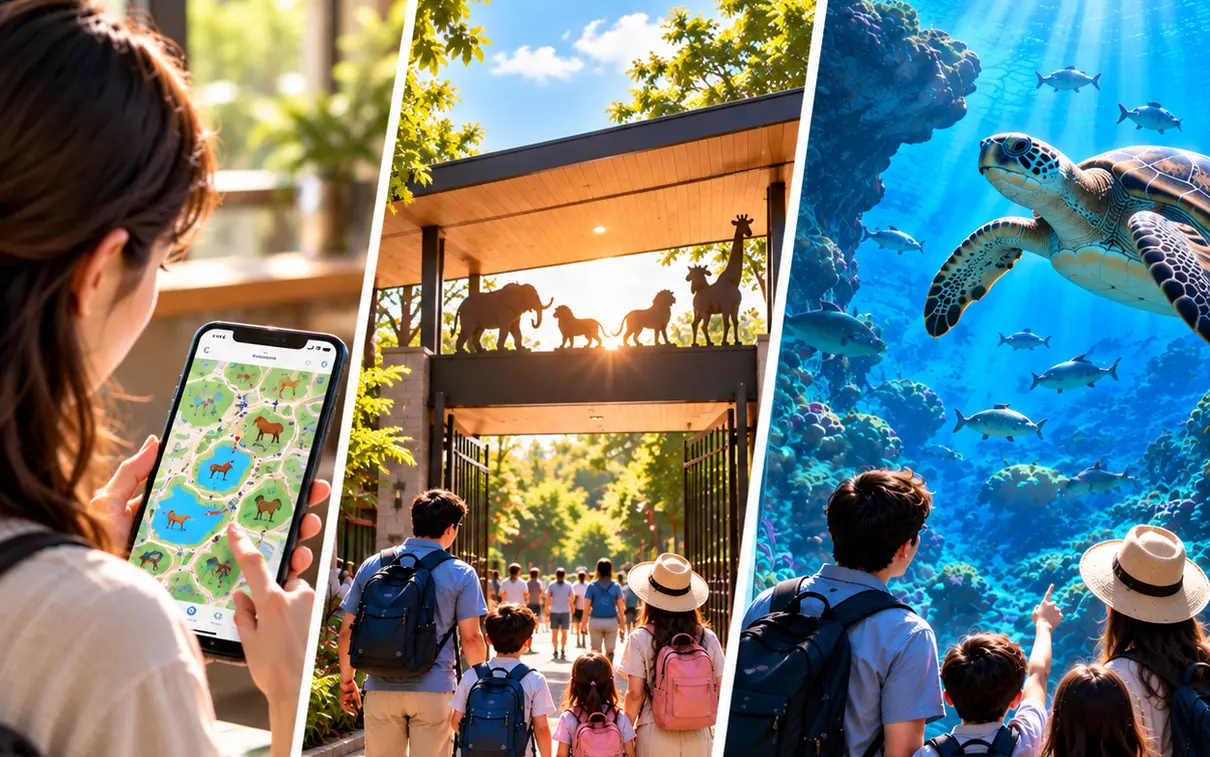
At theme and water parks, parking may be separated from gates, transportation points, attractions, and entertainment zones. At zoos, aquariums, museums, and science centers, visitors may need to connect parking with the right entrance, accessibility route, exhibit, program, or event. At conferences and trade shows, multiple lots, entrances, registration points, halls, and sessions can create a different kind of navigation challenge. At tourism destinations and parks, parking may be the transition point between driving and exploration.
The more complex the physical environment, the more important it becomes to make the visitor’s next decision obvious.
Research on theme-park visitor behavior reinforces why arrival, transport, and spatial movement deserve attention. A 2021 study of Ocean Park Hong Kong found that visitors spent nearly 26% of their time on “mundane” activities including hospitality facilities and transport, and linked different spatial-engagement patterns with perceptions of layout, crowds, facilities, and waiting times.
The study does not prove that digital parking navigation solves arrival friction. It does show that movement, transport, and the physical layout are meaningful parts of the overall visitor experience. Digital wayfinding gives organizations a practical way to make those transitions easier to understand and, importantly, to measure where friction is occurring.
The Executive Opportunity: Measure Where Friction Occurs
The leadership question is not simply, “Do we need more signs?” It is: “Where does uncertainty enter the visitor journey?” Useful signals can include navigation-related visitor questions, searches for parking and entrances, digital map engagement, use of accessible-route information, commonly searched destinations, and visitor feedback about arrival clarity. Pilot Measurement Framework- Parking-related searches
- Entrance and destination searches
- Accessible-route usage
- Navigation-related staff questions
- Visitor feedback about arrival clarity
Pigeon-Tech Perspective: Make Arrival Easier to Understand
For destination leaders, the desired outcome is a visitor journey that is easier to understand, easier to navigate, and easier to improve with data. Pigeon-Tech supports that outcome by connecting digital guidance with the broader visitor experience rather than treating parking as a standalone map function.
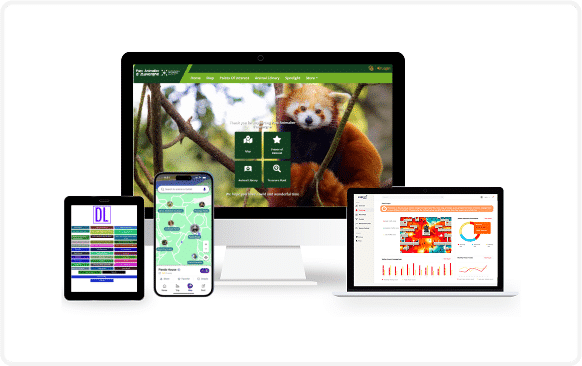
A Pigeon-Tech implementation can connect parking and entrance information with interactive destination maps, accessible-route and amenity guidance, multilingual content, destination discovery, event or exhibit information, and visitor analytics, based on the data and capabilities available for that destination.
The goal is not to replace every existing system. Ticketing, event, content, attraction, and operational systems may already contain useful information. Pigeon-Tech can complement those systems by bringing relevant visitor-facing information together around the journey.
And navigation does not have to end at the entrance. The same digital experience that helps someone arrive can help them discover what to do next: an event beginning nearby, an exhibit they may otherwise miss, an amenity along the route, or another experience relevant to their visit.
That is where digital wayfinding becomes more than a map. It becomes part of the visitor experience infrastructure.
Executive Takeaways
- The visitor experience starts before the entrance. Parking and arrival are often the first physical interactions visitors have with a destination.
- Confidence matters as much as direction. Good navigation reduces uncertainty and unnecessary decision-making.
- Physical and digital wayfinding should work together. Static signage provides essential location guidance; digital experiences can add context around the visitor’s destination and needs.
- Design the entire journey. Arrival, parking, entrance, exploration, and departure should not feel like disconnected experiences.
- Measure friction, not technology for technology’s sake. The meaningful question is whether visitors and staff experience less effort.
Start with One Arrival Problem
People rarely leave a great attraction, museum, conference, or destination talking about how easy the parking was. But they remember when arrival was confusing.
For leaders evaluating the visitor journey, the starting point does not have to be a large technology implementation. Ask one question: Where does uncertainty first enter our visitor journey?
Then choose one problem, one journey, and one measurable outcome. A focused proof of concept can test whether digital wayfinding reduces friction without replacing existing systems or redesigning the entire visitor experience.
One problem. One visitor journey. One measurable outcome.
Frequently Asked Questions
Digital parking navigation uses interactive maps and mobile-accessible information to help visitors understand parking areas and how those locations connect with entrances, amenities, attractions, events, and other destinations.
It can reduce the number of decisions visitors need to make by connecting arrival information, parking, entrances, routes, and destinations in one visitor-facing experience.
Yes, when accessibility information is available, digital wayfinding can surface accessible entrances, elevators, ramps, amenities, and appropriate routes.
No. Digital and physical wayfinding can complement each other. Physical signage provides location-based guidance; digital experiences can add contextual information based on destination and visitor needs.
Useful indicators include navigation-related staff questions, visitor searches, map engagement, accessibility information usage, and feedback about arrival clarity.
Yes. A connected visitor experience can extend beyond parking to entrances, attractions, exhibits, events, amenities, dining, accessibility information, and departure guidance.